

Ines inherits her late father’s cartography workshop, along with a leather-bound notebook explaining a truth she never suspected: any map he drew with a particular ink, made from a rare mineral he’d spent decades sourcing carefully, did not simply describe the world. It quietly reshaped it. Her village is facing its worst drought in memory. Ines now understands, with growing unease, that she holds the power to end it.
Table of Contents
- Part 1: What the Notebook Explained
- Part 2: The First Small Change
- Part 3: Where It Actually Came From
- Part 4: The Drought
- Part 5: What Ines Chose
Part 1: What the Notebook Explained
Ines had always known her father, Julien, as a meticulous, quietly respected cartographer, spending long hours in his workshop producing maps of unusual precision for wealthy clients across the region. She had not known, until his sudden passing three months earlier, that his gift extended considerably further than simple accuracy.
The notebook, discovered tucked inside a locked drawer of his workshop desk, explained everything in his careful, familiar handwriting. A particular ink, made from a rare mineral he had spent over a decade sourcing from increasingly obscure suppliers, possessed a genuine, if narrow, capacity to reshape reality itself, provided the map drawn with it remained small in scope and modest in ambition.
I have used this gift exactly eleven times in thirty years, the notebook read. Each time, I have felt the weight of what it actually costs, even when the change itself seemed genuinely good. I am leaving this knowledge to you, Ines, not as an inheritance to be used freely, but as a burden to be carried carefully. I never fully solved the question this gift presents. I suspect you may not either. I am sorry to leave it unfinished.
Ines read the passage three times, sitting alone in her father’s workshop, the particular ink he described sitting innocuously in a small glass vial on his desk, waiting.

Part 2: The First Small Change
Ines did not act on the notebook’s revelation immediately, spending several weeks instead simply absorbing its implications, testing her own understanding against smaller, more careful experiments.
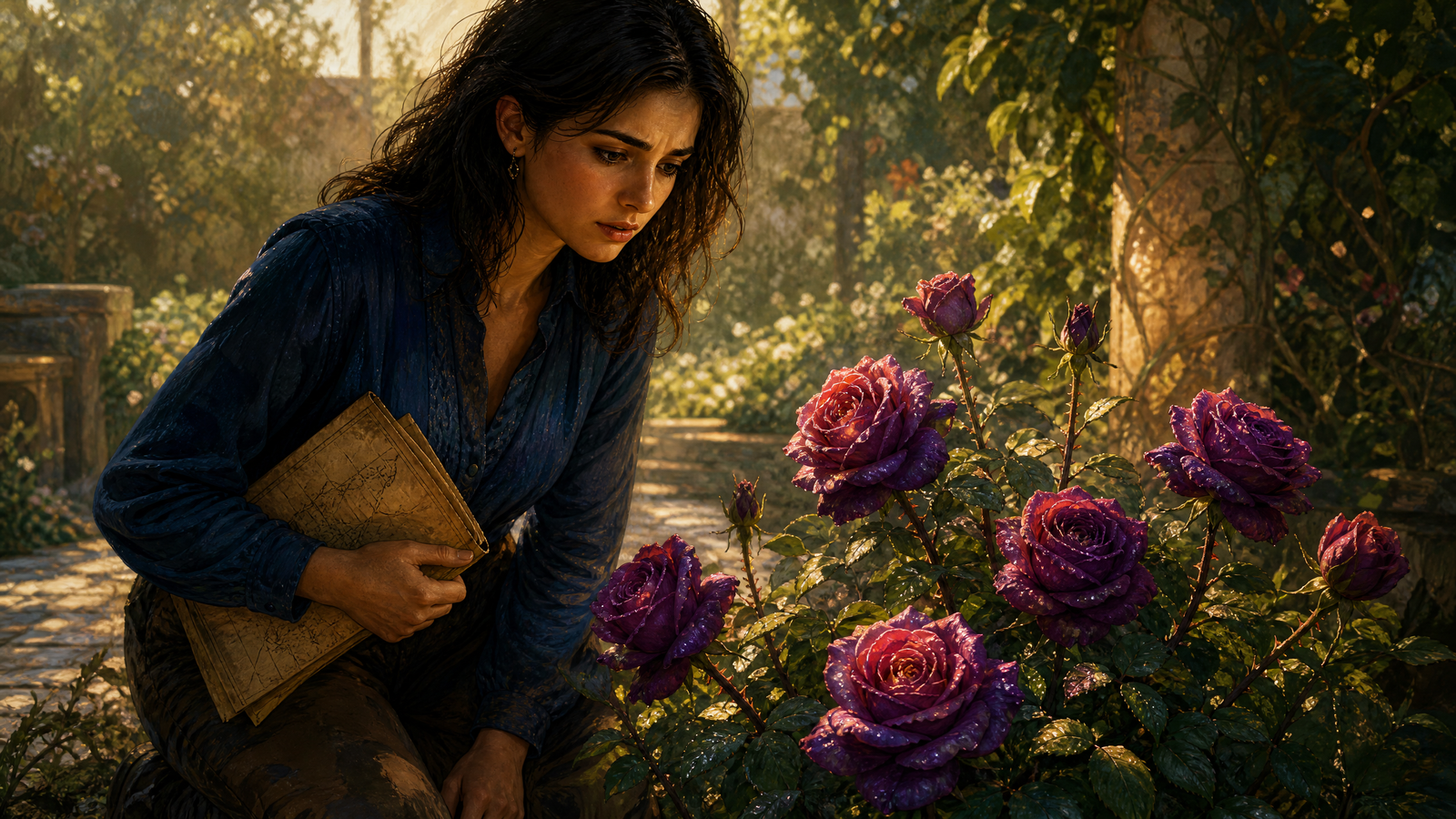
Her first attempt was deliberately modest: a small map of her own garden, redrawn with a single new rosebush added along the eastern fence line, precisely where none had grown before.
The following morning, a rosebush stood exactly where she had drawn it, fully grown, as though it had always been there.
Ines stared at it for a long time, genuine wonder mixing uncomfortably with the notebook’s careful warnings about cost. She examined the rosebush closely, searching for any obvious sign of what its sudden existence might have required, any withered plant elsewhere, any strange absence she could immediately connect to its presence.
She found nothing conclusive, though the notebook’s own uncertainty on this exact point nagged at her considerably. The cost is rarely obvious or immediate, her father had written. I have spent years trying to trace it clearly, without full success. I believe it exists nonetheless. Absence of visible evidence is not evidence of absence.
Part 3: Where It Actually Came From
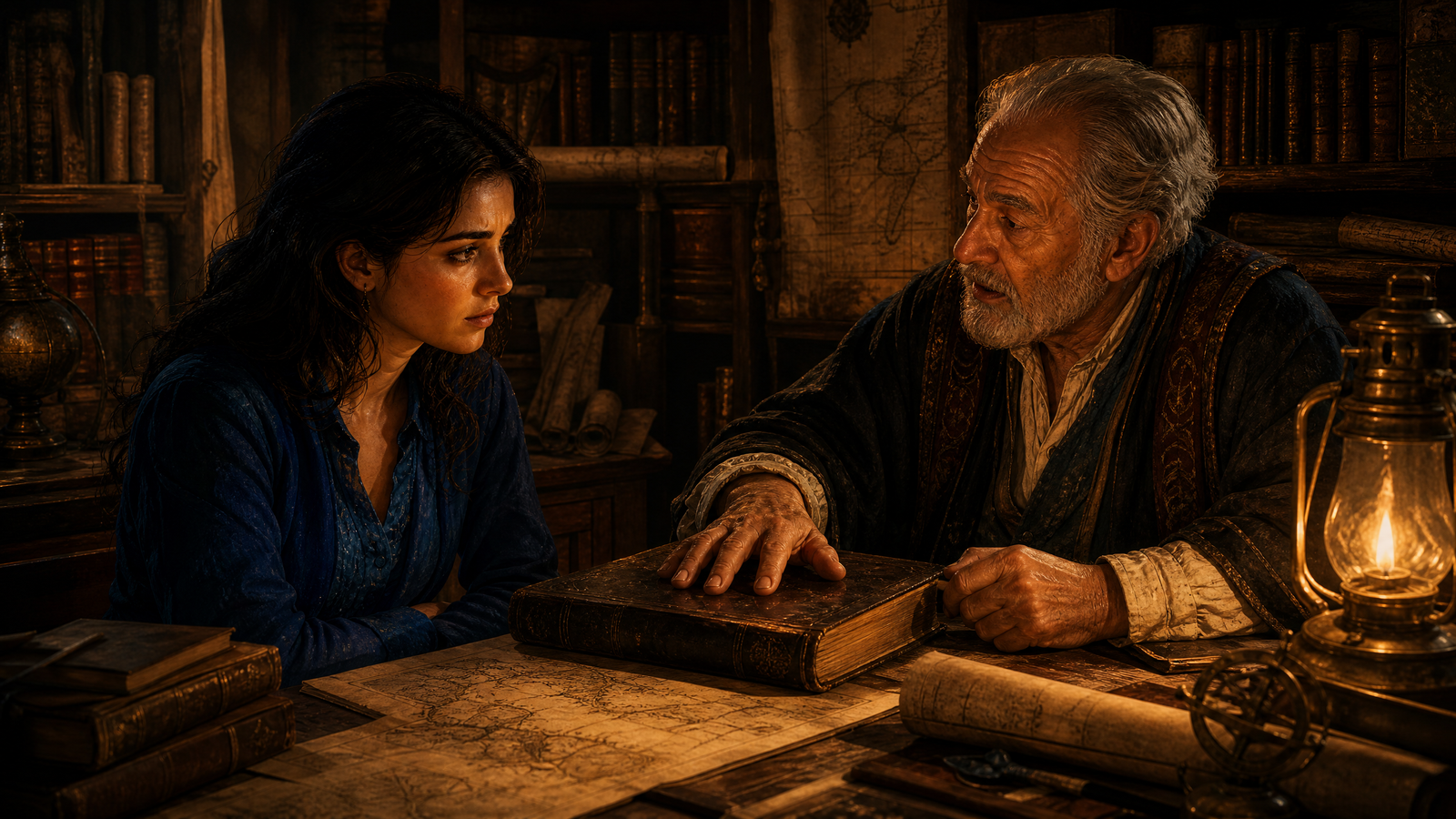
Seeking clarity, Ines visited Old Toma, a reclusive scholar living at the village’s edge, rumored, according to her father’s notebook, to have once helped him understand the ink’s true nature decades earlier.
Toma listened to her careful explanation with grave, unsurprised attention. “Your father found me twenty-eight years ago,” he said, “with questions remarkably similar to yours. I told him then what I’ll tell you now: that particular ink draws its power from balance, not creation. It does not conjure something from nothing. It moves resources, possibility, fortune itself, from somewhere else to wherever the map directs it.”
“From where, exactly?” Ines asked.
“That, I genuinely cannot tell you with certainty,” Toma admitted. “The connection is rarely direct or traceable. Your rosebush likely drew its vitality from soil considerably distant from your garden, weakening growth somewhere you will probably never identify or witness directly. Small changes draw small, diffuse costs, spread thin enough across the world to remain essentially invisible.”
“And large changes?” Ines asked, already anticipating the answer with growing dread.
“Large changes draw large costs,” Toma said simply. “Concentrated, and often, considerably easier to trace back to their true source, once you understand clearly what you’re looking for.”
Part 4: The Drought
The drought arrived that same summer, the worst the region had experienced in over four decades, wells running dangerously low, crops failing steadily across increasingly desperate farmland.
Ines watched her neighbors’ growing suffering with mounting internal conflict, the small glass vial of her father’s ink sitting heavily in her mind even when physically locked away in his old desk drawer.
“You could fix this,” her closest friend, Bettina, said one evening, unaware of the notebook’s existence, simply commenting generally on the region’s worsening crisis. “If anyone could somehow solve this drought, wouldn’t you want them to, whatever it actually took?”
Ines said nothing, though the question lodged itself uncomfortably deep, considering everything Toma had explained about cost and concentration, about changes large enough to actually matter drawing correspondingly large, traceable consequences from somewhere else entirely.
She drew a test map that night, small and careful, redirecting a modest amount of rainfall toward her village’s central well, nothing dramatic, nothing that should, by her father’s own careful logic, draw an unreasonable cost from elsewhere.
The following week, disturbing news arrived from a distant coastal town, one Ines had never visited, never even heard mentioned before: unprecedented flooding, entire streets submerged, considerably worse than anything their own records had documented previously.
Ines sat with that news for a long time, understanding with sick, immediate clarity exactly what her small, careful test had actually cost, and precisely who had ultimately paid for it.
Part 5: What Ines Chose
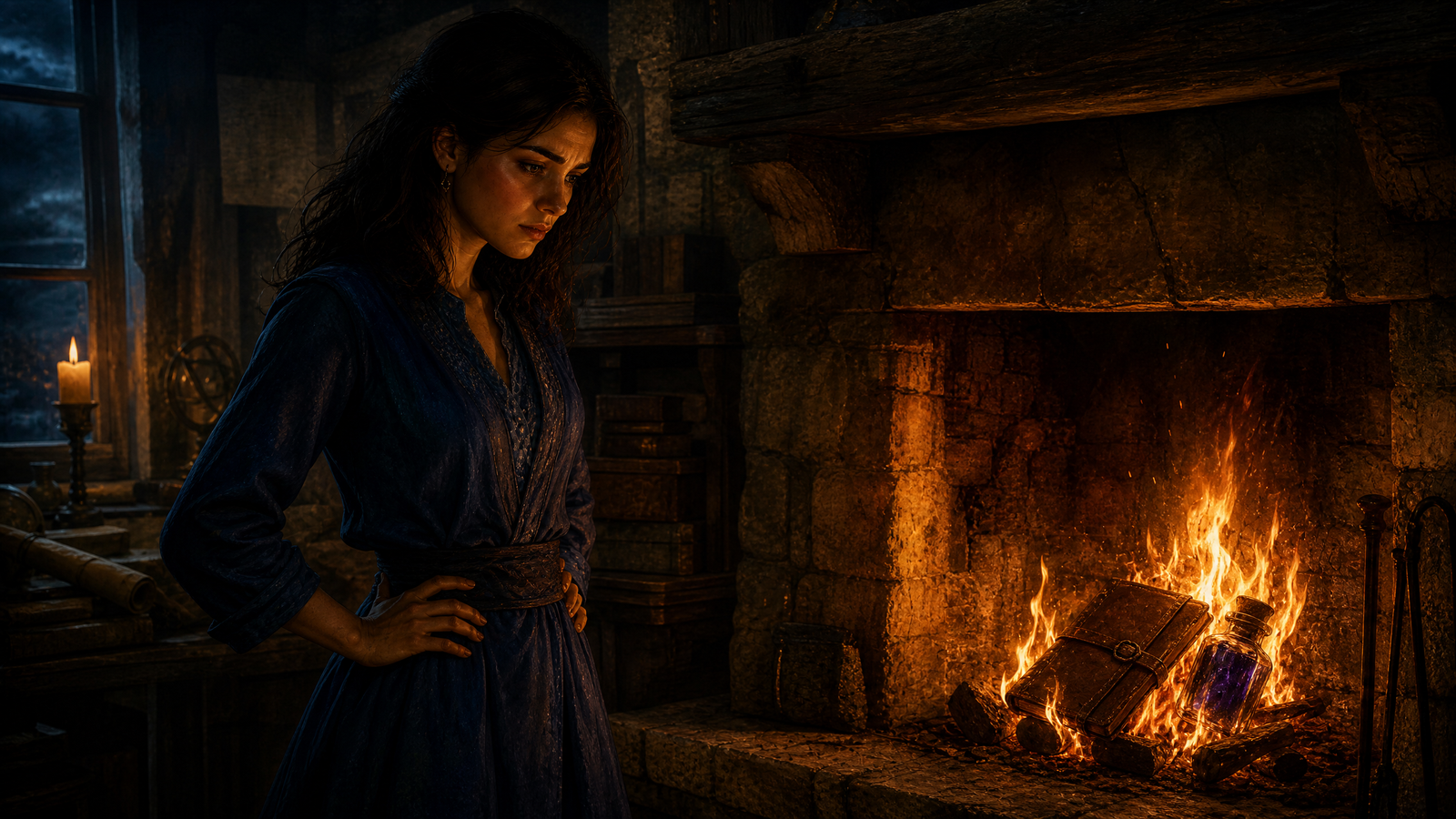
She burned the remaining ink three days later, along with her father’s careful notebook, watching both curl into ash in the workshop’s small stone fireplace, resisting every instinct that argued she could simply be more careful next time, more precise, more genuinely responsible than whatever unknown factor had caused that distant flooding.
“You could have saved considerably more people than you might have hurt,” Toma observed quietly, when she visited to tell him of her decision. “The math, coldly considered, might have favored using it regardless.”
“Maybe,” Ines said. “But it was never actually my choice to make on their behalf, weighing their suffering against strangers I’d never meet, who never consented to bearing any cost for my village’s benefit. My father carried this exact question for thirty years and never fully resolved it either. I don’t think resolving it was ever really the point. I think the actual point was refusing to let the power make the choice easier than it should genuinely feel.”
The drought continued for another difficult month before finally breaking naturally, the village’s suffering real and considerable, though ultimately survivable through the ordinary, unglamorous work of careful rationing and mutual community support.
Ines kept her father’s empty notebook afterward, its final pages now blank where the ink’s remaining formula had once been carefully documented, a permanent reminder of a solution she had ultimately judged too costly to ever fully trust herself with, regardless of how urgently, how genuinely, that trust might have once seemed justified.
The End
Quick Check
- What does Ines learn about her father’s cartography ink after his death?
- What happens after Ines draws a small test map of a rosebush in her garden?
- What does Old Toma explain about where the ink’s power actually comes from?
- What happens after Ines tries to use the ink to help with the village’s drought?
- Do you agree with Ines’s final decision to destroy the ink, even though it might have saved more people than it hurt? Why or why not?
Key Vocabulary
| Word | Meaning | Example |
|---|---|---|
| Meticulous | extremely careful and precise about details | She was meticulous in checking every measurement. |
| Obscure | not well known or difficult to find | He found the rare ingredient from an obscure supplier. |
| Reclusive | preferring to live alone, avoiding other people | The reclusive author rarely gave interviews. |
| Diffuse | spread out over a wide area, not concentrated | The soft light was diffuse throughout the room. |
| Unprecedented | never having happened before | The storm caused unprecedented damage to the coastline. |
| Consented | agreed to something willingly | She consented to the medical procedure after understanding the risks. |
Enjoyed this fantasy tale about difficult choices and hidden power? Continue with another story of magic and consequence in The Kite That Carried Wishes | B1 Fantasy Story.