

Amir has always noticed something strange in the sound of falling rain, patterns nobody else seems to hear, rhythms that somehow predict what the sky will do days before it happens. Nobody in the village takes him seriously. Not until the rain starts telling him something too dangerous to ignore.
Table of Contents
- Part 1: The Pattern in the Rain
- Part 2: The Grandmother’s Gift
- Part 3: No One Believes Him
- Part 4: When the Sky Finally Spoke Loud Enough
Part 1: The Pattern in the Rain
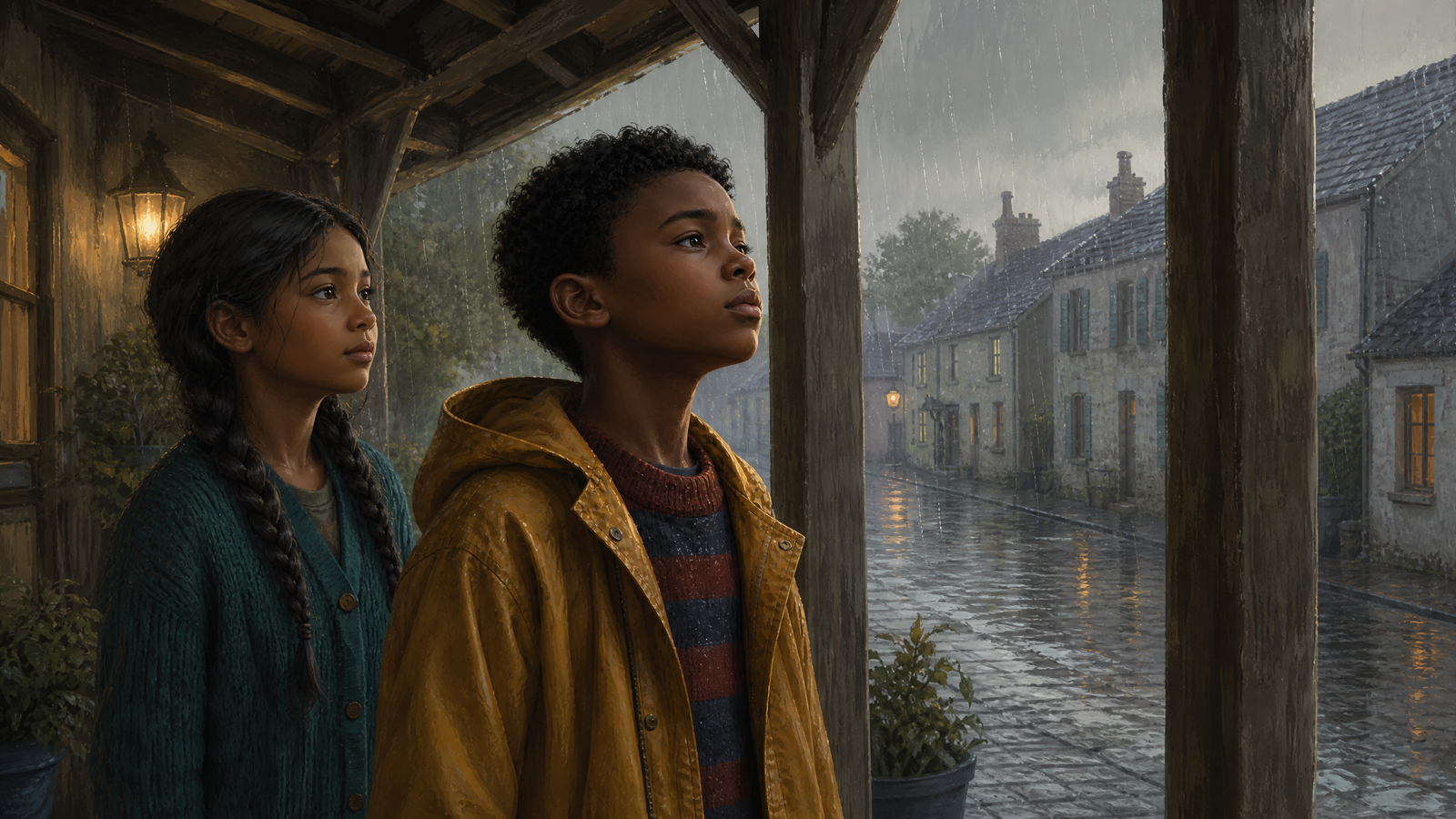
Amir had noticed it for as long as he could remember, though he’d never quite found the right words to explain it to anyone. When rain fell, it wasn’t just noise. There were patterns hidden inside it, rhythms that shifted subtly depending on what the sky was actually planning to do next.
A gentle, even patter usually meant a calm, ordinary shower, gone within an hour. A rhythm that stumbled slightly, uneven and hesitant, often meant the rain would stop and start again several times before evening. And sometimes, rarely, the rain carried a rhythm that made Amir’s whole body go tense, sharp and frantic, like the sky itself was nervous about something.
He’d learned to predict small things this way for years: which afternoons would stay dry enough for outdoor chores, which nights would bring thunder. His friend Layla was the only person who took his strange talent seriously.
“You knew it would rain again before lunch,” Layla said one morning, impressed, watching dark clouds gather exactly where Amir had predicted the day before. “How do you always know?”
“I don’t really know how to explain it,” Amir admitted. “The rain just… tells me things, if I listen carefully enough.”
Part 2: The Grandmother’s Gift
That evening, Amir mentioned the strange rhythm he’d been hearing lately to his mother, a pattern faster and more urgent than anything he remembered noticing before.
His mother went quiet for a moment, an odd expression crossing her face. “Your grandmother used to talk about something like that,” she said slowly. “Before you were born. She always said she could ‘read’ the weather, days before it actually arrived. People thought she was simply eccentric. Some called her wise. Others just found her strange.”
“Did anyone believe her?” Amir asked.
“Some did,” his mother said. “Enough that when she warned about a bad storm, back before I was even your age, several families moved their animals to higher ground in time. But as she got older, people slowly stopped listening. It’s easier to dismiss something you don’t understand, I suppose, especially once the person saying it isn’t around to keep proving it.”
Amir sat with that thought for a long time after his mother left the room. His grandmother had passed away three years earlier, and nobody had mentioned her strange gift to him even once before now.
The next morning, the rain returned, and the rhythm Amir heard made his stomach tighten with real unease. It was faster now, more insistent, layered with something that reminded him uncomfortably of the sound of a drum before a warning.

Part 3: No One Believes Him
Amir went straight to the village hall, where the town’s mayor, a practical, no-nonsense man named Mr. Okafor, was reviewing paperwork at his desk.
“Sir, I think there’s going to be serious flooding,” Amir said, trying to sound as calm and convincing as possible. “In about three days, maybe less. The rain has been telling me.”
Mr. Okafor looked up, one eyebrow raised. “The rain has been telling you,” he repeated, not unkindly, but clearly amused. “Amir, I appreciate your concern, truly. But we can’t issue flood warnings based on a boy’s feelings about rain sounds.”
“It’s not just a feeling,” Amir insisted. “My grandmother used to hear it too. She was right before, years ago.”
“Your grandmother,” Mr. Okafor said gently, “was a lovely woman, but she was also known for some rather unusual ideas. I’m sorry, Amir. I simply can’t act on this.”
Amir left the village hall feeling frustrated and a little embarrassed, the rhythm of the coming rain still pulsing anxiously somewhere in the back of his mind, impossible to ignore no matter how hard he tried.
Layla believed him immediately, without hesitation. “If you say something’s coming, I believe you,” she said simply. “My family will move our things to higher ground, just in case. What harm could it do?”
Amir spent the next two days trying to convince as many neighbors as he could, some listening politely and doing nothing, a few, like Layla’s family, quietly taking his warning seriously anyway.

Part 4: When the Sky Finally Spoke Loud Enough
On the third day, exactly as Amir had predicted, the rain arrived, and it did not stop. It fell in thick, relentless sheets from early morning through the entire afternoon, the nearby river rising faster than anyone in the village had seen in years.
By evening, water was pushing steadily into the lower streets near the river, exactly the area Amir had warned about most urgently. Families who had listened to him, Layla’s included, had already moved their most important belongings and animals to higher ground days earlier. Others scrambled desperately at the last minute, wading through rising water to save what they could.
Mr. Okafor found Amir late that evening, both of them soaked from helping neighbors move sandbags along the rising riverbank. “I owe you an apology,” the mayor said, raising his voice slightly over the sound of the rain. “I should have taken you more seriously.”
“It’s alright,” Amir said, though he was secretly relieved to finally be believed. “I just wish more people had listened in time.”
“Some did, thanks to you,” Mr. Okafor said. “That’s more than nothing. That’s actually quite a lot, considering.”
In the weeks that followed, as the village slowly rebuilt what the flood had damaged, people began speaking about Amir’s grandmother again, not as an eccentric old woman, but as someone who had genuinely understood something most people simply couldn’t. Mr. Okafor even suggested, half-seriously, that the village should establish an official weather watcher position, and that Amir, obviously, would be the natural choice.
Amir still couldn’t fully explain how he heard what he heard in the rain. But for the first time, he stopped feeling like he needed to. Some gifts, he was slowly learning, didn’t need to be explained to be trusted, especially once they had already proven themselves, drop by drop.
The End
Key Vocabulary
| Word | Meaning | Example |
|---|---|---|
| Rhythm | a regular, repeated pattern of sound or movement | “The drummer kept a steady rhythm throughout the song.” |
| Hesitant | slow to act or speak because of uncertainty or nervousness | “She gave a hesitant answer, unsure if it was correct.” |
| Eccentric | behaving in an unusual or slightly strange way, often in a harmless manner | “Our neighbor is a bit eccentric, but everyone likes him.” |
| Dismiss | to decide that something or someone is not important enough to think about seriously | “He dismissed the idea without really considering it.” |
| Relentless | continuing without stopping or slowing down | “The relentless heat made it hard to work outside.” |
| Riverbank | the land along the edge of a river | “They set up their tents on the grassy riverbank.” |
Quick Check
- What strange ability does Amir have when it comes to rain?
- What does Amir learn about his grandmother from his mother?
- Why does Mr. Okafor initially refuse to take Amir’s warning seriously?
- What happens on the third day, exactly as Amir predicted?
- Have you ever had an idea or feeling that others didn’t take seriously at first, but turned out to be right? What happened?
If you enjoyed this B1 story, continue practicing with another tale at your level.