

Elena inherits her estranged grandmother’s isolated countryside house, along with a leather journal containing a single, unsettling instruction written on its very first page: never read past the last entry. She has never been a particularly superstitious person. She is beginning to understand why her grandmother might have become one.
Table of Contents
- Part 1: The Inheritance
- Part 2: The Journal
- Part 3: What the Shopkeeper Knew
- Part 4: New Handwriting
- Part 5: The Last Entry
Part 1: The Inheritance
Elena had not spoken to her grandmother in almost nine years when the lawyer’s letter arrived, informing her that she had inherited Wren House, an isolated stone property at the edge of a small village she’d visited only twice as a child, along with its entire contents and a modest sum held in trust for its upkeep.
The estrangement had never been fully explained to her, even now, even in death. Her mother had simply described it, whenever pressed, as “complicated,” a word that had apparently satisfied nobody’s curiosity for three full generations.
“You’re really going to live there?” her brother, Marcus, asked over the phone, clear skepticism in his voice. “Alone? In a house you’ve barely set foot in since you were nine years old?”
“It’s paid for,” Elena said, more defensively than she’d intended. “My lease was ending anyway. I need somewhere to actually finish my dissertation without constant distractions. This seems as good an option as any.”
“Grandma cut off contact with practically everyone for the last decade of her life,” Marcus said. “I’m just saying, that’s not exactly nothing, Elena.”
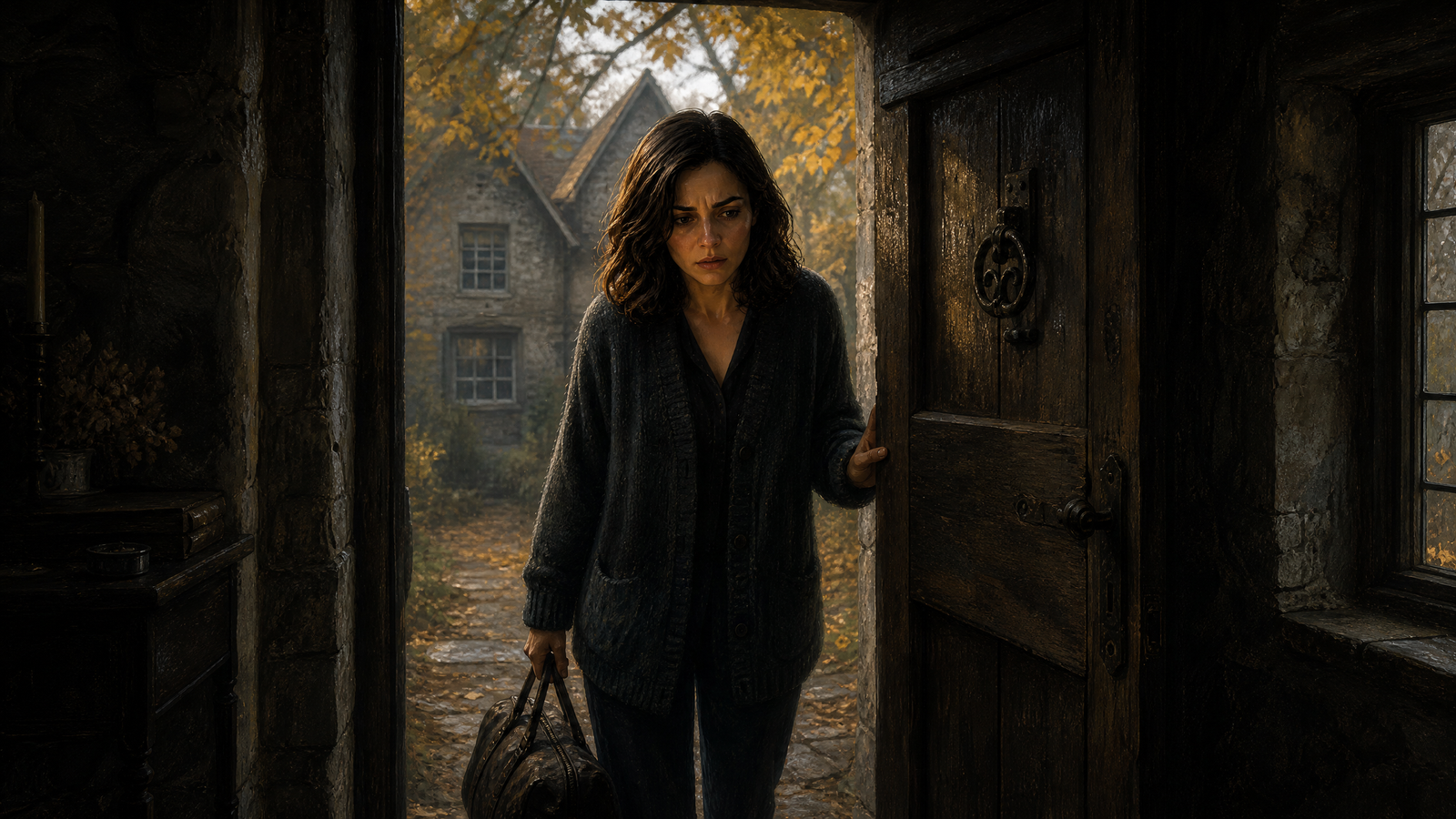
Elena moved in three weeks later regardless, the house’s heavy oak door swinging open onto rooms that smelled of dust, old paper, and something she couldn’t quite name, something that made her hesitate slightly on the threshold before finally stepping inside.
Part 2: The Journal
She found the journal on her fourth night, tucked inside a locked desk drawer she’d finally managed to pry open using an old letter opener, its leather cover cracked and worn smooth from decades of handling.
The first page contained a single line, written in her grandmother’s familiar, careful handwriting, though considerably shakier than Elena remembered from old birthday cards: Never read past the last entry.
Elena stared at the instruction for a long moment, curiosity warring uncomfortably with something closer to genuine unease. She’d never known her grandmother to be superstitious, at least not in the fragmented memories she still carried from childhood visits, before whatever had happened between them had happened.
She began reading anyway, starting from the earliest entries, decades old now, describing ordinary domestic life in careful, measured prose: garden plantings, village gossip, small disagreements with Elena’s own long-deceased grandfather. Nothing remotely unsettling, nothing that explained the strange warning on the very first page.
It was only as she approached entries from roughly fifteen years earlier that the tone began shifting, subtly at first, then considerably more overtly, her grandmother’s careful prose giving way to shorter, increasingly anxious fragments describing something she referred to only as “the presence,” something that apparently visited the house with growing frequency the longer she lived there alone.

Part 3: What the Shopkeeper Knew
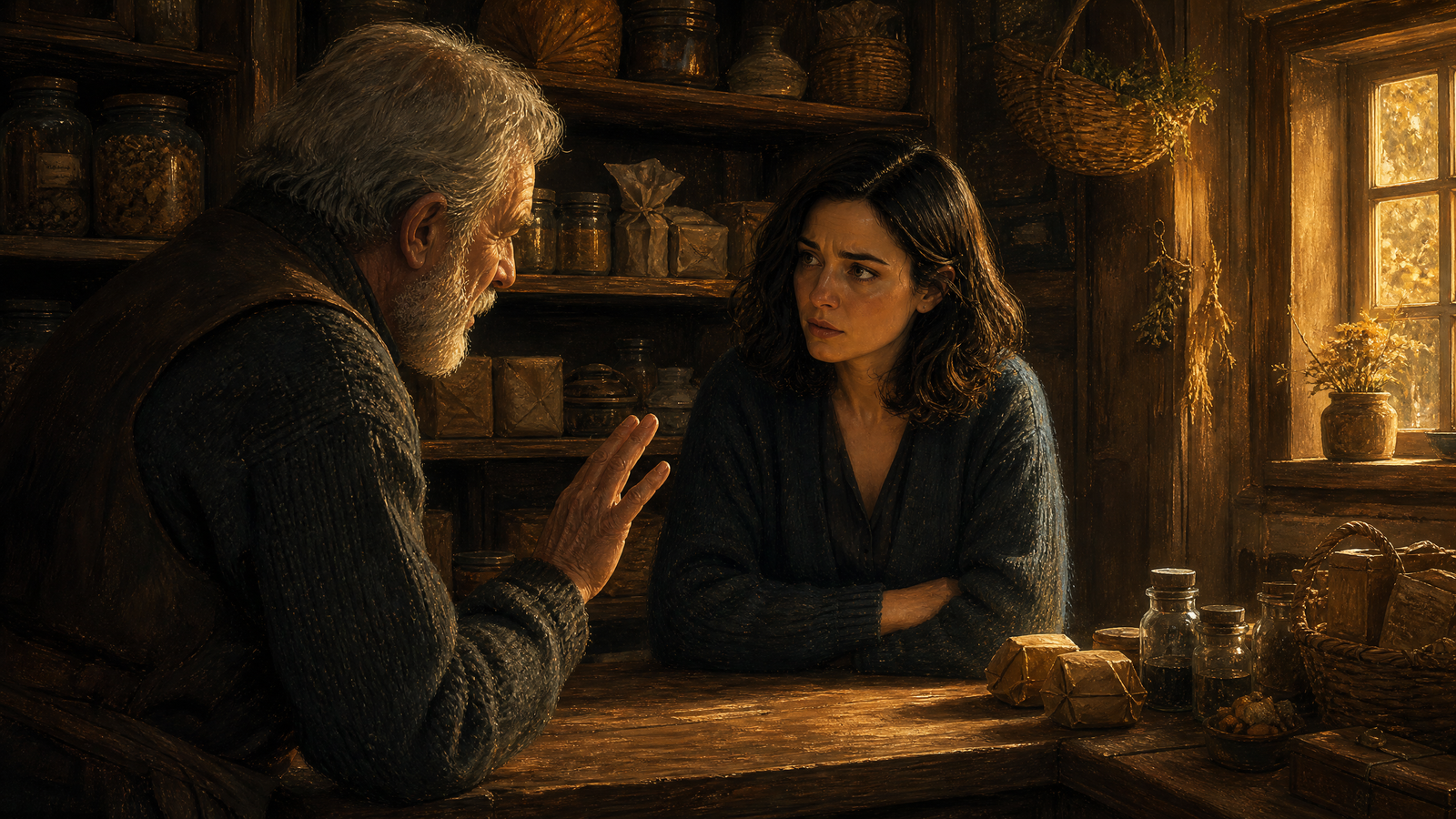
Elena mentioned the journal, carefully and somewhat hesitantly, during a visit to the village’s small general store the following afternoon, hoping the elderly shopkeeper might offer some useful context about her grandmother’s final years.
Mrs. Aldridge’s expression shifted noticeably at the mention of Wren House, something between genuine sympathy and careful, deliberate caution crossing her weathered features.
“Your grandmother stopped coming into the village entirely, the last several years of her life,” Mrs. Aldridge said slowly, setting down the items she’d been arranging on a shelf. “She used to be quite social, believe it or not. Something changed, gradually. She started saying odd things, toward the end. About the house. About needing to finish something before it was too late.”
“Finish what?” Elena asked, her earlier curiosity now edged with something considerably harder to dismiss.
“I couldn’t say for certain,” Mrs. Aldridge admitted. “She wasn’t always entirely coherent, those last few years. Grief does strange things to some people, especially living alone in an old house that size. I assumed it was simply that, honestly, until I heard what happened to her mother, decades earlier.”
“What happened to her?” Elena asked.
Mrs. Aldridge hesitated visibly before answering. “She died in that same house,” she said finally. “Alone, in her study, surrounded by papers nobody ever fully made sense of afterward. Some in the village said she’d lost her mind entirely, toward the end. Others said something rather different, though I confess I never put much stock in that particular version myself.”
Part 4: New Handwriting
That night, unable to sleep, Elena found herself back at the desk, journal open before her, working steadily through entries she’d already read once, searching for something she couldn’t quite name.
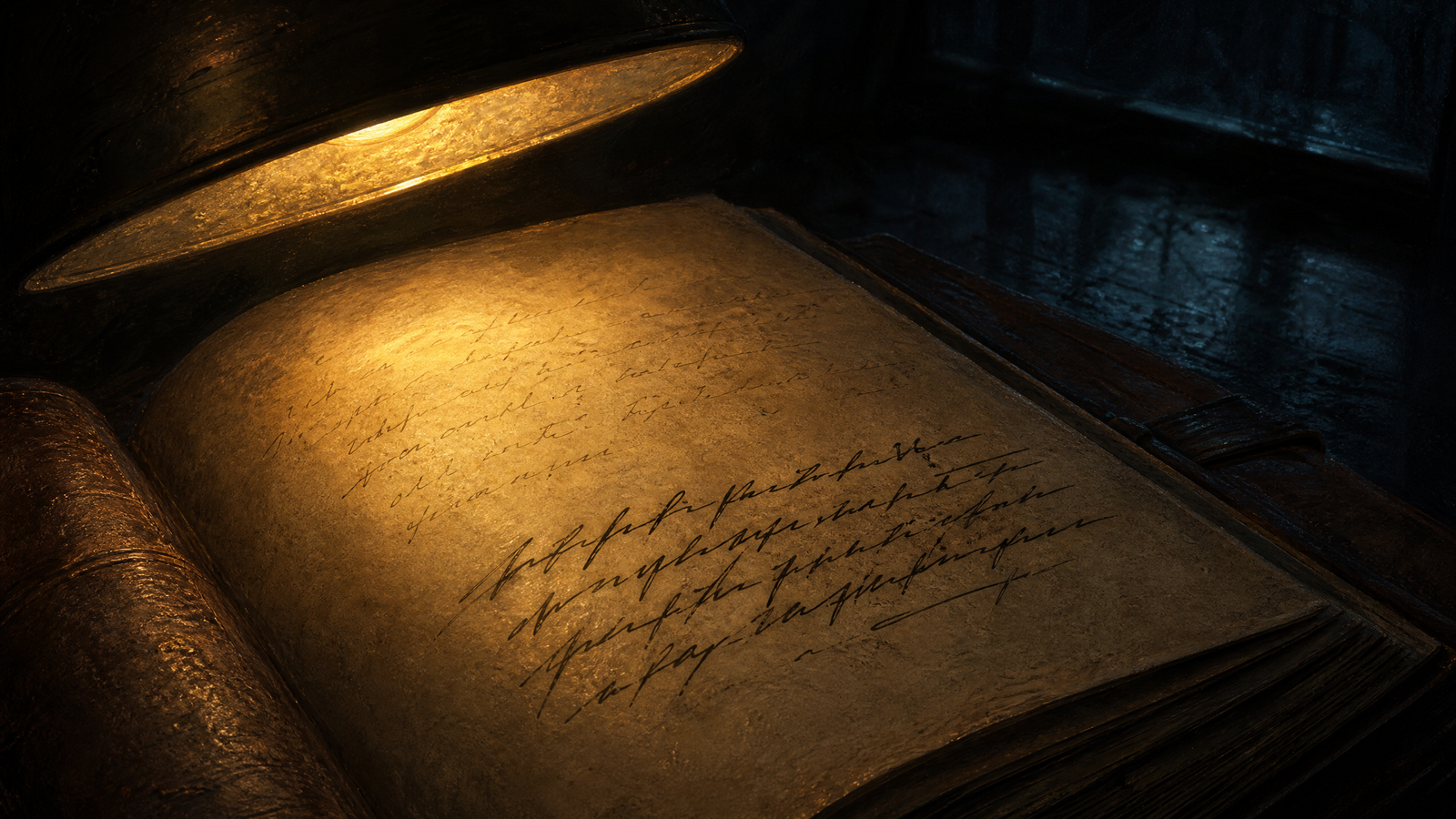
She noticed it almost by accident: a passage near the middle of the journal that she was certain, absolutely certain, she had already read the previous night, describing an ordinary autumn afternoon in the garden. Except now, beneath that entry, in handwriting considerably fresher and less faded than the surrounding pages, several new lines had been added.
She is reading again. I told her not to. I told myself the same thing, once, and read anyway.
Elena’s hands went cold, genuinely cold, staring at handwriting that matched her grandmother’s careful script exactly, ink that looked, impossibly, considerably newer than anything else on the page.
She closed the journal immediately, heart pounding, and sat in the dim lamplight for a long time, trying to construct any reasonable explanation. Exhaustion, perhaps. A trick of tired eyes and unfamiliar surroundings. She had, after all, been under considerable stress lately, the isolation, the unresolved grief of an estrangement she’d never properly understood.
She almost convinced herself of this explanation. Almost, until she opened the journal again three nights later and found another new line, this one considerably more direct than the last.
You should stop now, while you still remember which entries are yours.
Part 5: The Last Entry
Elena did not stop. She told herself, with increasingly hollow conviction, that she needed to understand what had actually happened to her grandmother, that turning back now would mean living indefinitely with an unanswered question considerably more unsettling than whatever answer she might eventually find.
She read steadily onward over the following week, watching the entries grow shorter, more fragmented, her grandmother’s once-careful handwriting deteriorating into something increasingly frantic as the pages progressed toward their end. New lines continued appearing between the old ones, always slightly ahead of wherever Elena had most recently read, as though something in the house were pacing her progress with unsettling precision.
I understand now what my own mother meant, one particularly recent addition read. The house doesn’t want you to leave once you’ve started reading. It wants a witness. It has always wanted a witness, generation after generation, and I was foolish enough to believe understanding that would somehow protect me from becoming the next one.
Elena reached the final original entry on a Thursday evening, her grandmother’s handwriting there barely legible, clearly written under considerable duress. Beneath it, in handwriting so fresh the ink appeared almost wet, a final new line had already been added, waiting for her.
You are the last entry now. Write something true before you close this book, or it will write something for you instead.
Elena sat frozen for a long moment, pen hovering uncertainly above the blank space that remained, genuinely unable to decide whether writing anything at all represented an act of defiance or simply the final, inevitable step in a pattern considerably older than her own brief, complicated life.
Somewhere upstairs, faintly, she heard the unmistakable sound of a floorboard settling beneath careful, deliberate weight, though she knew with complete certainty that she was, and had always been, entirely alone in Wren House.
She picked up the pen.
The End
| Word | Meaning | Example |
|---|---|---|
| Estrangement | a state of being distant or disconnected from someone, especially a family member | Their estrangement lasted almost a decade before they finally spoke again. |
| Superstitious | believing in things that cannot be explained by reason or science, often related to luck or fate | She was superstitious about walking under ladders. |
| Coherent | making sense, clear and logical | His explanation wasn’t entirely coherent after the accident. |
| Deteriorating | becoming gradually worse over time | The old building’s condition was steadily deteriorating. |
| Duress | extreme pressure or difficult circumstances | She wrote the letter under considerable duress. |
| Defiance | open resistance or refusal to obey | He crossed his arms in quiet defiance. |
Quick Check
- What warning does Elena find on the first page of her grandmother’s journal?
- What does Mrs. Aldridge tell Elena about her grandmother’s final years, and about her great-grandmother?
- What strange thing does Elena notice about the journal’s handwriting as she continues reading?
- What does the final new line in the journal ask Elena to do?
- Why do you think the story ends without showing exactly what Elena writes? What effect does that choice have on you as a reader?
If this haunted house tale kept you turning pages, continue the chill with another B2 story from Fluent Flow English.