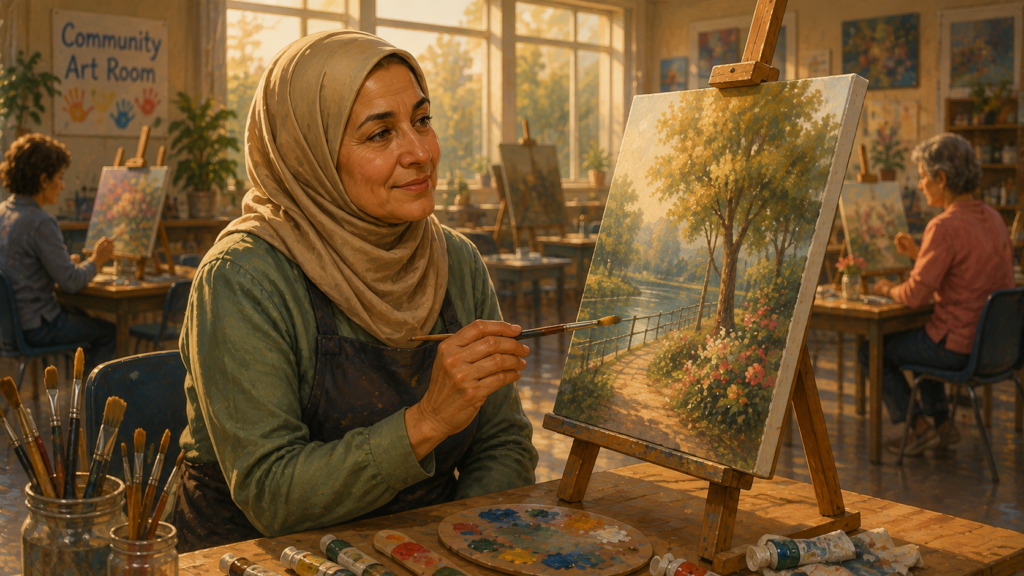
Huda’s youngest daughter left for university three weeks ago, and the house has been unbearably quiet ever since. Twenty-two years of packed lunches, homework help, and constant noise, gone almost overnight. Huda isn’t quite sure who she’s supposed to be now that nobody needs her the way they used to.
Table of Contents
- Part 1: The Empty Rooms
- Part 2: What Used to Be Hers
- Part 3: The Community Center Flyer
- Part 4: Starting Again
Part 1: The Empty Rooms
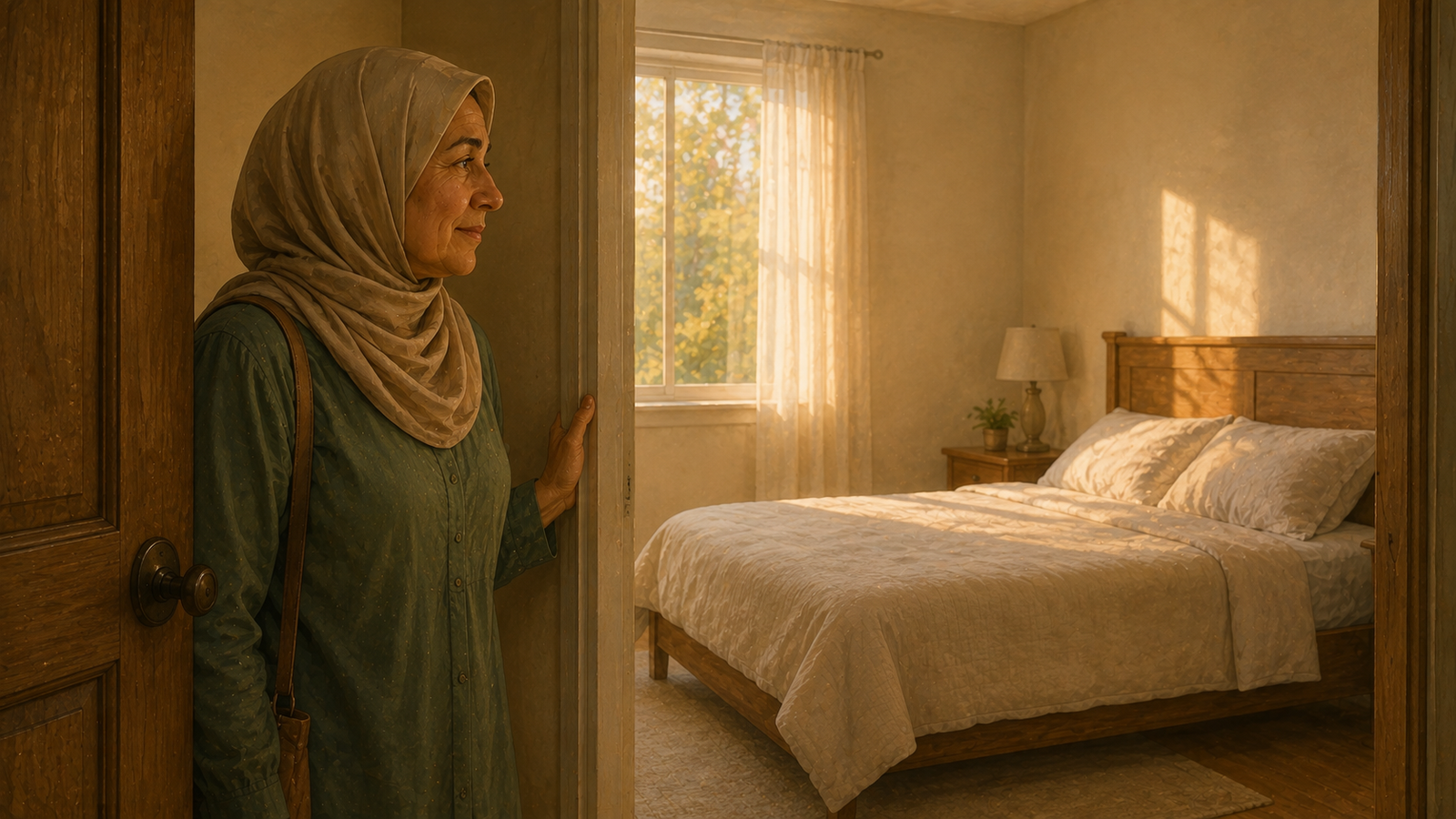
Huda stood in her daughter Mariam’s bedroom doorway, staring at the neatly made bed, the bare walls where posters used to hang, the closet only half full of clothes Mariam hadn’t taken with her to university.
The house had been loud for twenty-two straight years, first with one child, then two, then three, footsteps on the stairs, arguments over the television, homework spread across the kitchen table every single evening. Now, with Mariam gone, following her older siblings out into their own lives years earlier, the silence felt almost physically heavy.
“You’ve been standing there a while,” her husband, Tariq, said gently, appearing in the hallway behind her.
“I keep expecting to hear her music through the wall,” Huda admitted. “It’s strange, missing a sound that used to actually annoy me.”
Tariq wrapped an arm around her shoulders. “It’ll take some adjusting,” he said. “For both of us.”
“What am I supposed to do now?” Huda asked quietly, the question surprising even herself with how raw it sounded out loud. “Every single day for over twenty years has revolved around raising our children. I genuinely don’t know what my days are supposed to look like anymore.”
Part 2: What Used to Be Hers
Over the following two weeks, Huda found herself wandering through her own home at odd hours, unsure what to do with time that had never truly belonged to her before.
She called Mariam every evening, sometimes twice, until her daughter gently, kindly pointed out that she was actually doing fine at university, genuinely thriving in her new classes and new friendships.
“I love you, Mom,” Mariam said during one call, laughing softly, “but I promise I haven’t forgotten how to feed myself.”
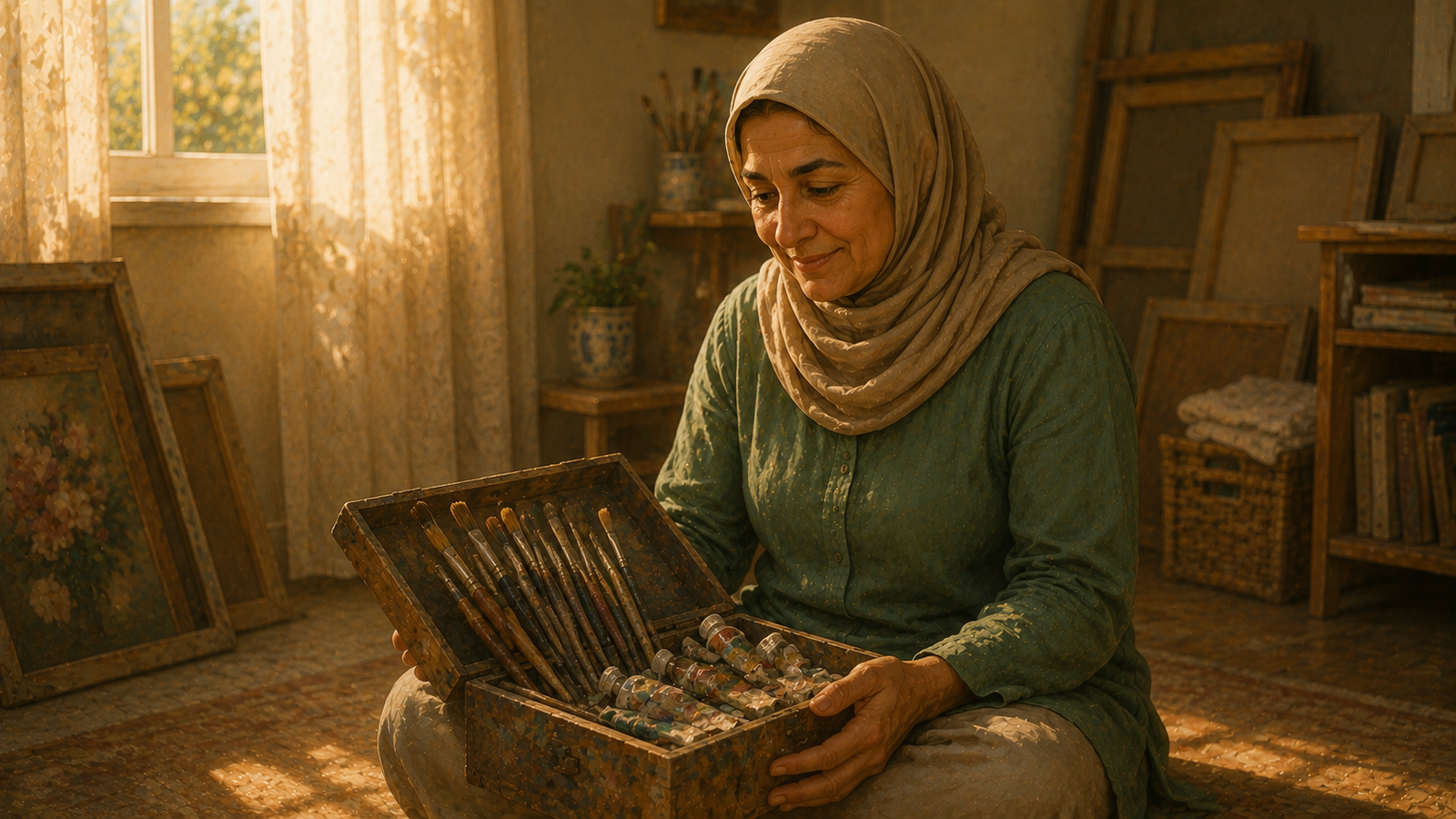
Huda laughed despite herself, though the conversation left her feeling strangely hollow afterward. She wandered into the small spare room at the back of the house, originally meant as a study, and found, tucked in the back of a closet, an old wooden box she hadn’t opened in years.
Inside were paintbrushes, dried-out tubes of watercolor paint, and a stack of half-finished canvases from a hobby she’d abandoned decades earlier, back when her oldest child was born and free time had simply stopped existing.
She sat on the floor for a long time, holding a paintbrush she hadn’t touched in over twenty years, trying to remember the person who had once used it so often.
Part 3: The Community Center Flyer
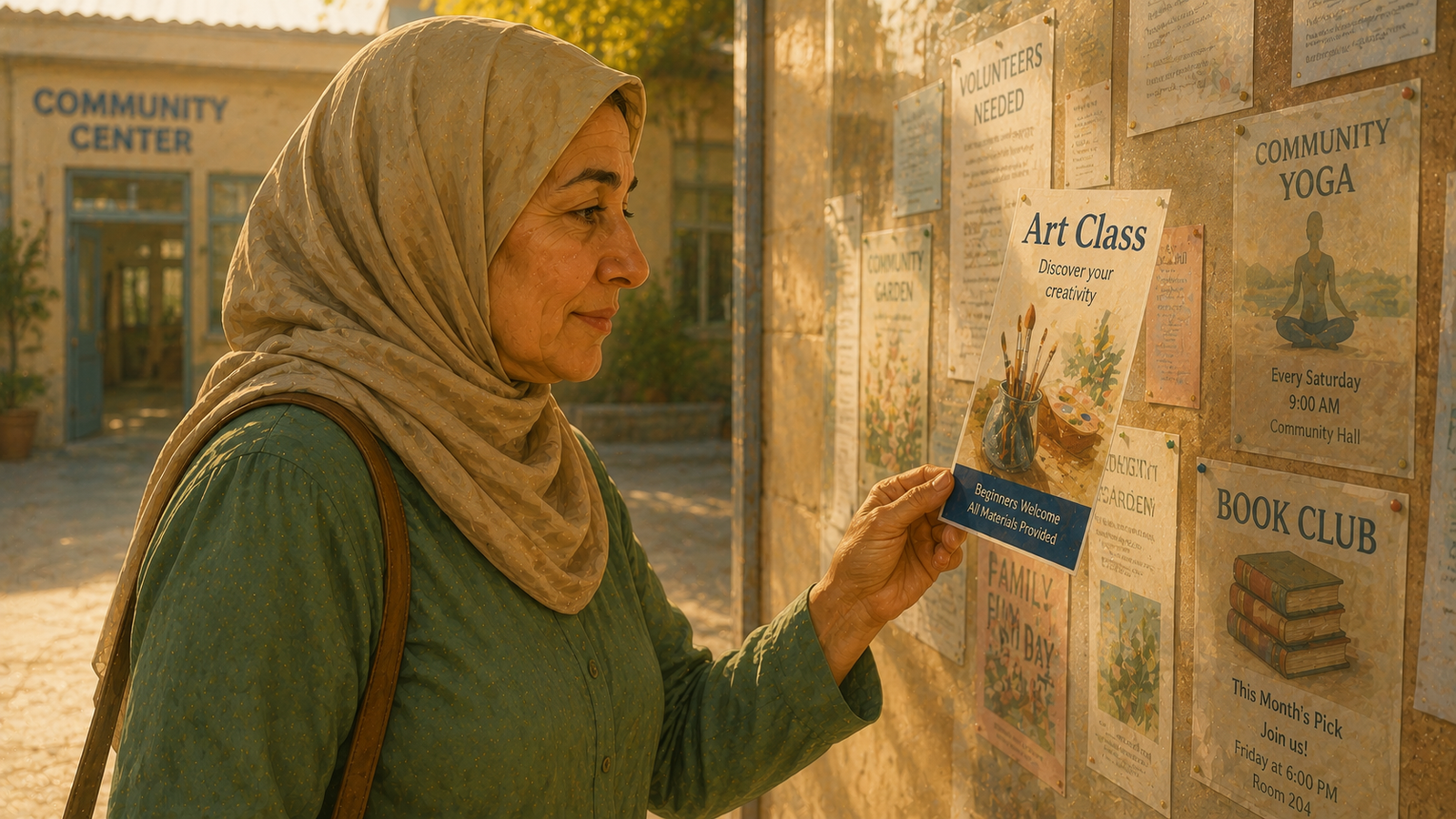
The following week, while picking up groceries, Huda noticed a small flyer pinned to the community center’s bulletin board: a beginner’s watercolor class, meeting every Wednesday evening, open to all skill levels.
She stood staring at it for several minutes, an odd mixture of excitement and genuine nervousness building in her chest, before finally, almost impulsively, taking a photo of the registration details with her phone.
“I’m thinking about signing up for something,” she told Tariq that evening, showing him the flyer photo. “A painting class. I used to paint, before the kids. I don’t even really remember why I stopped.”
“I remember exactly why,” Tariq said, smiling warmly. “Because you were raising three children practically single-handedly, while I was traveling constantly for work. There wasn’t exactly spare time floating around back then.”
“Do you think it’s silly?” Huda asked. “Starting something like this now, at fifty-two?”
“I think,” Tariq said carefully, “that you’ve spent over two decades putting everyone else’s needs first, without much complaint. I think you’ve more than earned a Wednesday evening for yourself.”
Part 4: Starting Again
Huda’s hands shook slightly the first evening she walked into the community center’s small art room, twelve strangers already seated at easels, most of them, she noticed with some relief, roughly her own age.
“First time painting?” the woman at the next easel asked warmly, noticing Huda’s obvious nervousness.
“First time in over twenty years,” Huda admitted. “I used to paint constantly, before I had children. I honestly don’t remember exactly why I stopped, beyond simply running out of time.”
“That happens to almost everyone in this room, I think,” the woman said, smiling knowingly. “I’m Samira. Empty nest, four months now, in my case.”
“Three weeks, for me,” Huda said. “It still feels strange saying it out loud.”
“It gets a little easier,” Samira said kindly. “Painting helps, in my experience. Gives you something that’s genuinely just yours again.”
As the class began, Huda picked up her paintbrush with hands that felt simultaneously foreign and familiar, dipping it carefully into pale blue paint, and made her first careful stroke across blank paper in over two decades.
It wasn’t particularly skillful. The lines wobbled slightly, the colors bled together more than she’d intended. But something in her chest loosened slightly as she worked, a quiet, forgotten satisfaction slowly resurfacing after years buried beneath packed lunches and homework schedules and other people’s needs.
That evening, she called Mariam, genuinely excited for the first time since her daughter had left. “I started a painting class today,” she said. “It’s been over twenty years. I’d honestly forgotten how much I actually loved it.”
“That’s amazing, Mom,” Mariam said, and Huda could hear the genuine warmth in her daughter’s voice. “You should send me a photo of what you make.”
“It’s not very good yet,” Huda warned.
“I don’t care,” Mariam said simply. “I just want to see it.”
Huda hung up the phone and looked around her quiet house, still adjusting to its new, unfamiliar silence. It still felt strange, some evenings. But for the first time in weeks, the quiet didn’t feel entirely empty anymore. It felt, cautiously, like room to grow into someone she’d nearly forgotten she used to be.
The End
Quick Check
- Why does Huda’s house feel so different after her daughter Mariam leaves?
- What does Huda find in the old wooden box in the spare room?
- What does Huda notice on the community center’s bulletin board?
- How does Huda feel during her first painting class, both physically and emotionally?
- Have you ever rediscovered an old hobby or interest after years of not doing it? What was that experience like?
| Word | Meaning | Example |
|---|---|---|
| Unbearably | in a way that is very difficult to accept or deal with | “The heat was unbearably hot that afternoon.” |
| Hollow | (here) feeling empty or without real satisfaction | “Winning felt strangely hollow without her friends there to celebrate.” |
| Impulsively | doing something suddenly, without careful thought beforehand | “He impulsively bought a plane ticket that same afternoon.” |
| Single-handedly | doing something alone, without help from others | “She single-handedly organized the entire event.” |
| Foreign | (here) unfamiliar or strange, not what you’re used to | “The new keyboard felt foreign under his fingers at first.” |
| Resurface | to appear again after being hidden or forgotten for a while | “Old memories resurfaced when she visited her childhood home.” |
Enjoyed this quiet, reflective story? Continue practicing your reading with The Postcards from Nowhere | B1 Mystery Story.