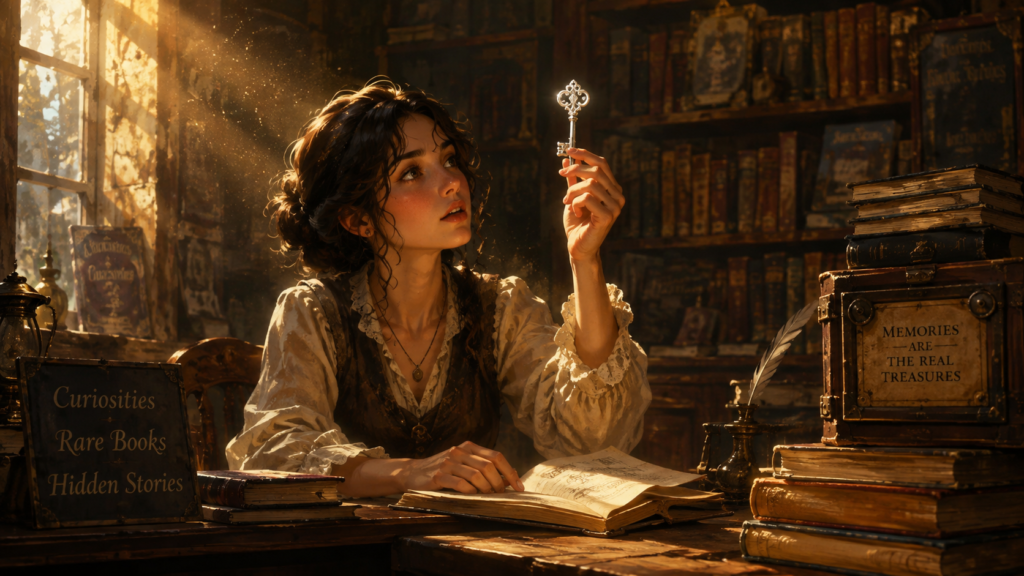
Emma inherits her grandmother’s old bookshop, filled with dust, silence, and forty years of secrets. Hidden in a locked drawer, she finds a small silver key that opens nothing she can see. But someone in town remembers exactly what it was made for. And they are not the only one still looking for it.
Table of Contents
Part 1: The Inheritance
Emma stood outside Rose’s Bookshop with a small brass key in her hand. The windows were dusty, and a faded “Closed” sign still hung behind the glass. It had been three weeks since her grandmother died, and Emma still could not quite believe the shop was hers now.
Her grandmother, Rose, had run the little bookshop for almost forty years. Emma remembered spending summers there as a child, reading old paperbacks on a green armchair while Rose helped customers find rare and unusual books. The shop always smelled like old paper and coffee.
Emma unlocked the front door and stepped inside. Everything looked exactly the same as she remembered, except quieter. Boxes of unsold books sat stacked near the register. A thin layer of dust covered the wooden shelves.
She had planned to sort through everything in one weekend and put the shop up for sale. But as she walked between the shelves, she realized the job would take much longer than she thought. There were thousands of books, and Rose had never organized anything in a normal way.
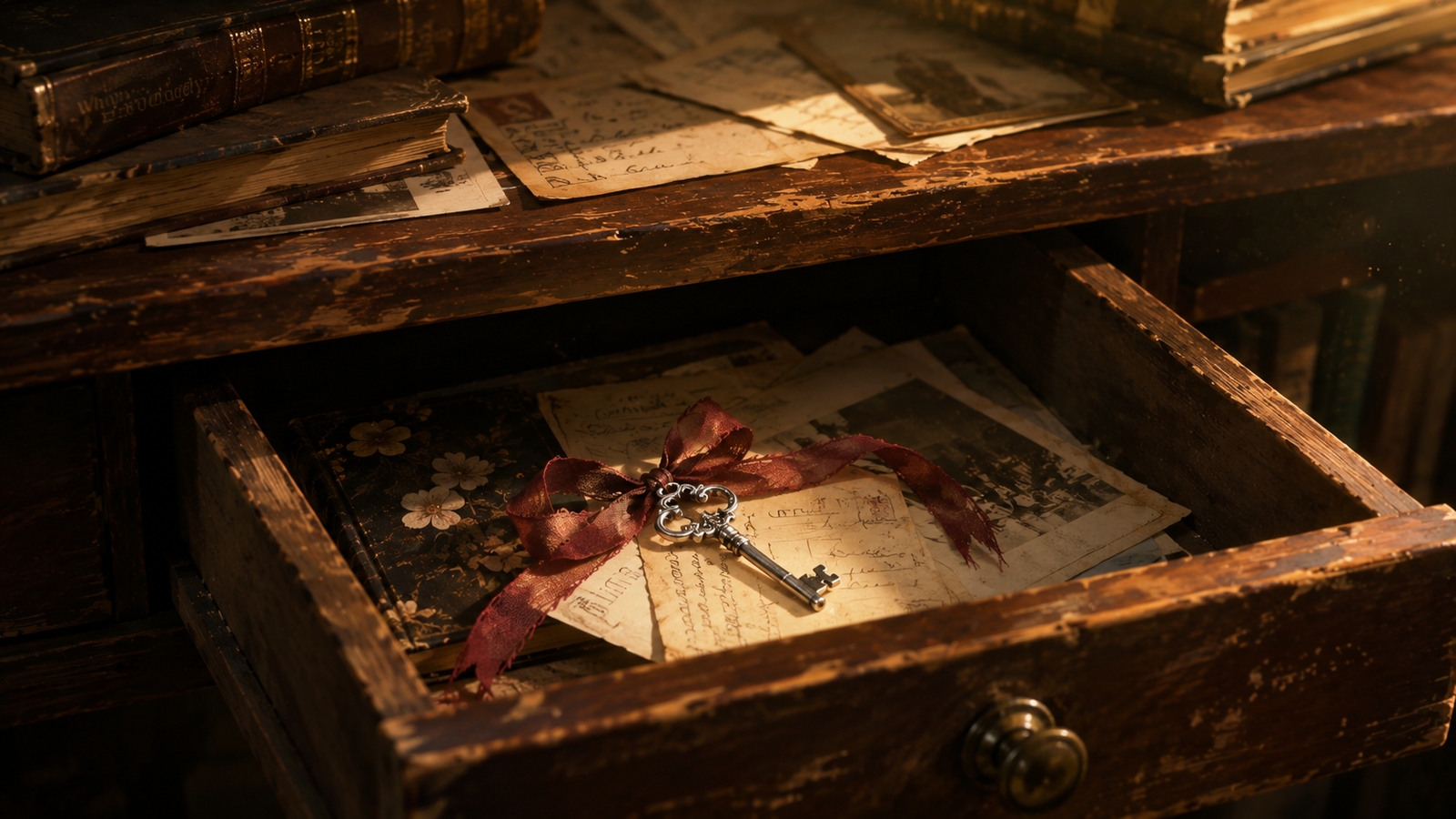
At the back of the shop, behind a curtain, Emma found her grandmother’s old desk. She had not seen it in years. The desk was heavy and wooden, covered with papers, receipts, and old photographs. Emma sat down slowly and opened the top drawer.
Inside, she found something strange: a small silver key, much older than any key she had seen before. It was tied with a thin red ribbon, and there was no label, no tag, nothing to explain what it opened.
Emma turned the key over in her hand. She had never seen it before, and as far as she knew, it did not match any lock in the shop.
“What were you hiding, Grandma?” she said quietly to the empty room.
Part 2: The Silver Key
Over the next few days, Emma tried every lock she could find. She tried the front door, the back door, the old filing cabinet, even a small wooden box on the shelf behind the register. Nothing worked. The silver key fit none of them.
She started to think maybe it opened something that was not even in the shop anymore. Maybe Rose had gotten rid of whatever it belonged to years ago, and the key was simply a forgotten piece of the past.
Still, something about it bothered her. Rose had never been a sentimental person. She did not usually keep things without a reason. If she had kept this key hidden in her desk for so many years, it had to matter.
Emma decided to ask around town. Maybe someone remembered a locked cabinet, a special box, or even an old safe that Rose had once owned.
Most people she spoke to only remembered Rose as the friendly woman who ran the bookshop and always had a good recommendation ready. Nobody knew anything about a silver key.
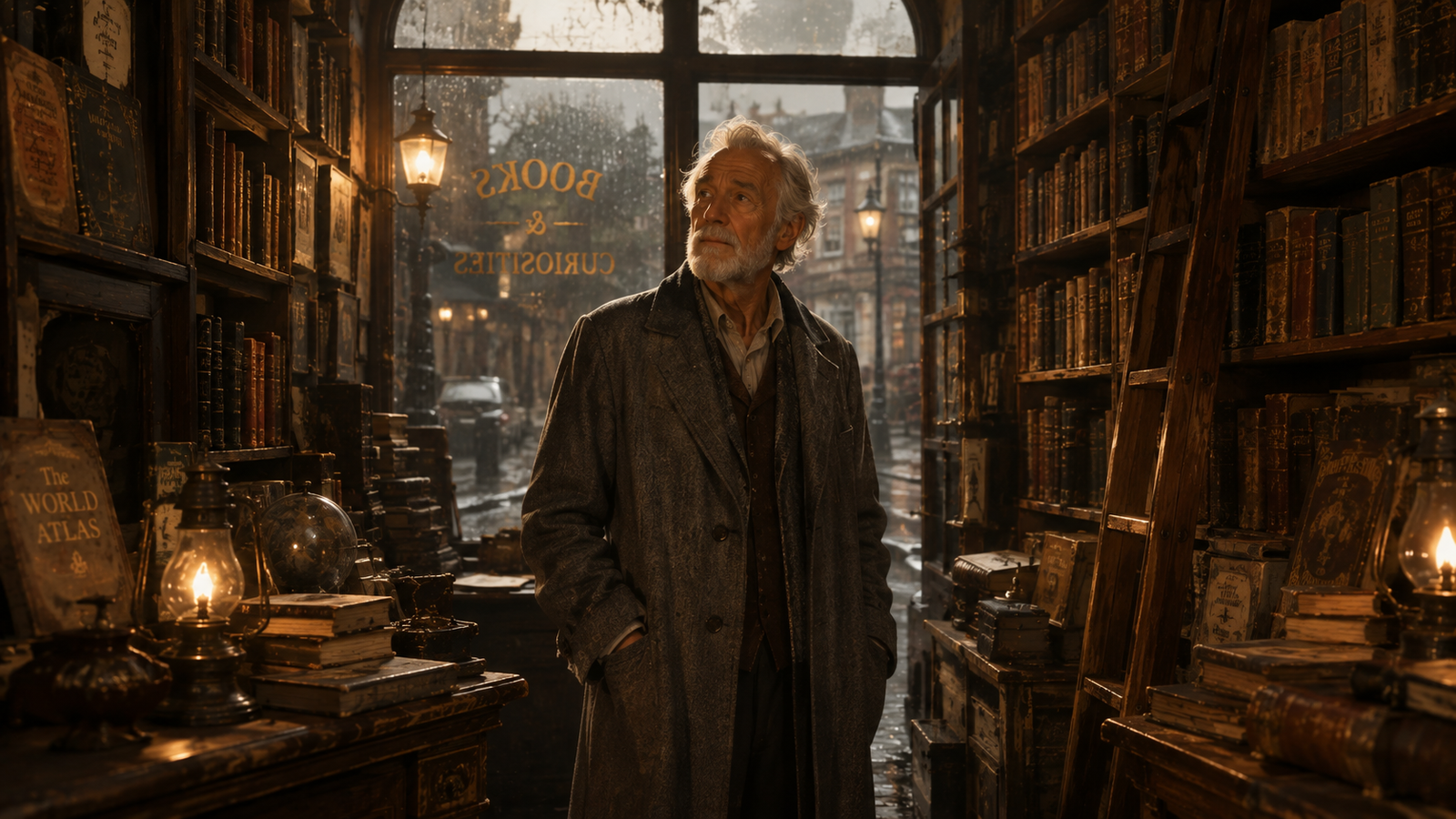
Then, on a rainy afternoon, an elderly man walked into the shop. He wore a long grey coat and moved slowly between the shelves, as if he was looking for something specific.
“I’m sorry, we’re not really open right now,” Emma said. “I’m just sorting through my grandmother’s things.”
The man looked up, surprised. “You’re Rose’s granddaughter,” he said. It wasn’t really a question. “I’m very sorry for your loss. My name is Mr. Whitfield. I’ve known your grandmother since I was a young man.”
Part 3: An Old Friend’s Story
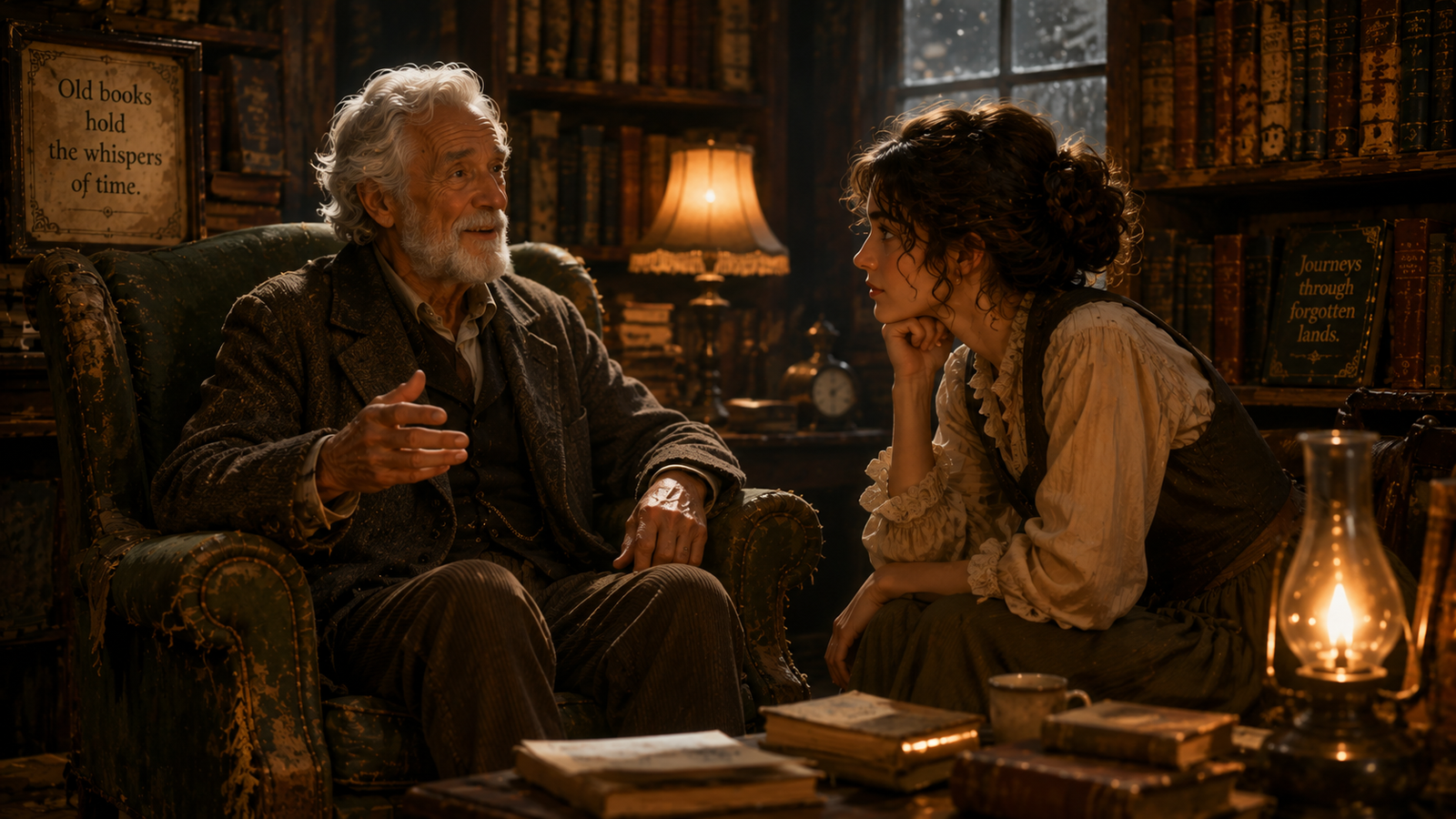
Mr. Whitfield sat down in the old green armchair, the same one Emma used to read in as a child. He looked around the shop with a soft, sad smile.
“Your grandmother and I go back a long way,” he said. “Back when this shop had a business partner too. A man named Mr. Hale.”
Emma had never heard that name before. “A business partner? I thought Grandma always ran this place alone.”
“She did, eventually,” Mr. Whitfield said. “But in the early years, she and Hale ran it together. He wanted to sell the rare and valuable books quickly, for a fast profit. Your grandmother disagreed. She believed some books should be protected, not sold to the highest bidder.”
He told Emma that Rose and Hale had argued for months about one particular book, a very old and valuable first edition that had come into the shop by chance. Hale wanted to sell it to a private collector overseas. Rose refused.
“One day,” Mr. Whitfield continued, “the book simply disappeared. Hale accused your grandmother of hiding it. She never admitted anything, and eventually, he left the business completely. She bought out his share and ran the shop alone from then on.”
Emma sat very still, thinking about the silver key upstairs in her pocket. “Do you think… she hid the book somewhere in this shop?”
Mr. Whitfield smiled again, this time a little more mysterious. “Your grandmother used to say something strange, back in those days. She used to say, ‘The truth is always behind the poetry.’ I never understood what she meant.”
Part 4: Behind the Shelf
After Mr. Whitfield left, Emma stood in the middle of the shop for a long time, thinking. Behind the poetry. It had to mean something.
She walked to the poetry section, a small shelf near the back window that Rose had always kept perfectly organized, unlike the rest of the chaotic shop. Emma ran her fingers along the old spines: Keats, Dickinson, Neruda, dozens of thin, worn books.
She began pulling books out one by one, checking behind them. Nothing. Just dust and the wooden back of the shelf.
Then, near the bottom shelf, she noticed something odd. One section of the wooden back panel looked slightly different from the rest, a little lighter in color, as if it had been replaced at some point.
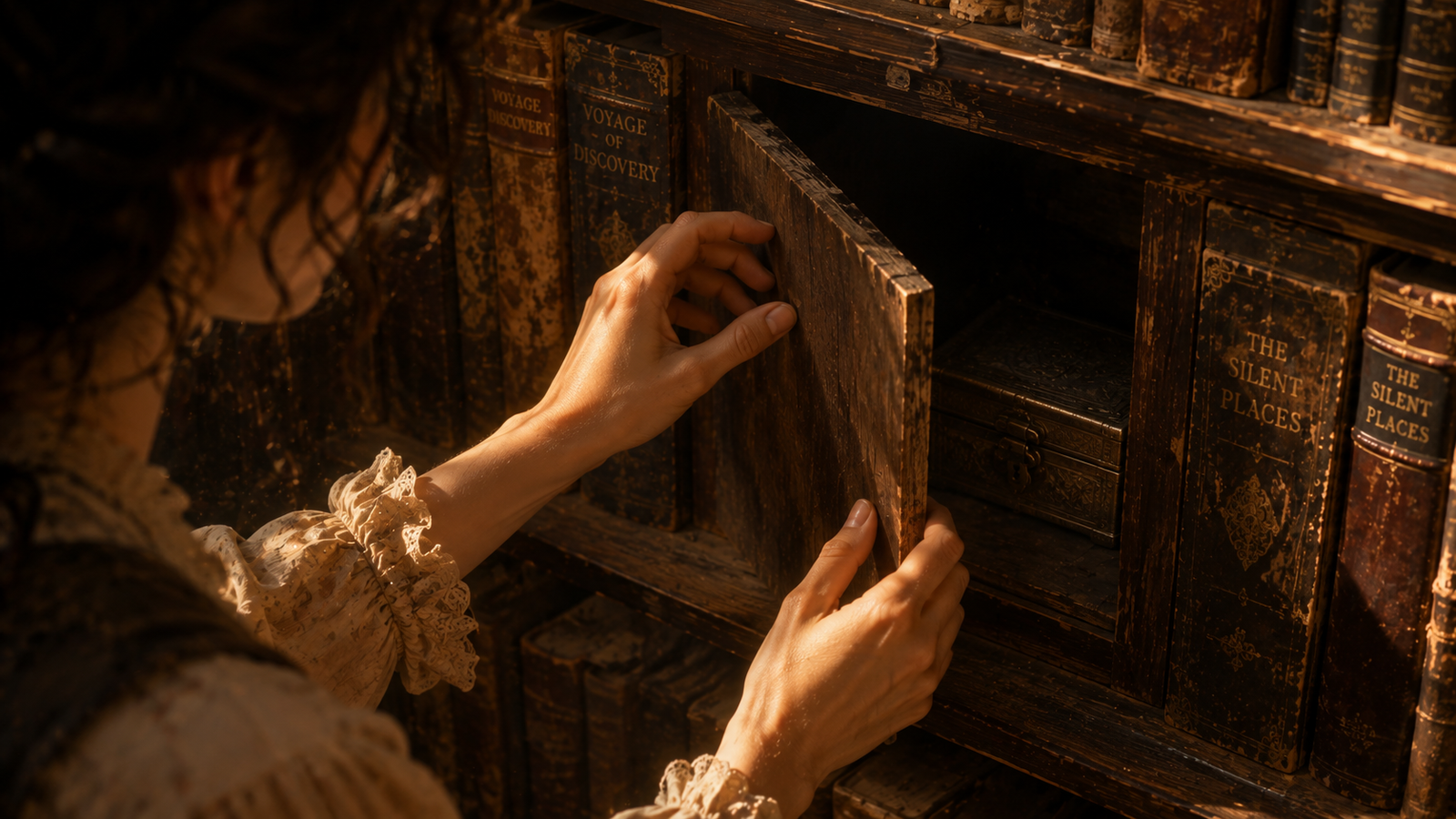
Emma pushed on it gently. It didn’t move. She pushed harder, and this time, she felt it shift slightly under her hand. A small wooden panel, cleverly built into the back of the shelf, swung open like a tiny door.
Behind it was a small metal box, exactly the right size for the silver key.
Emma’s hands were shaking as she pulled the key from her pocket and slid it into the lock. It turned smoothly, as if it had been waiting for her.
Inside the box, she found an old book wrapped carefully in soft cloth, and underneath it, a folded letter with her name written on the front in her grandmother’s handwriting.
She unfolded the letter and began to read.
“My dear Emma, if you are reading this, it means you finally found the poetry shelf, just like I always hoped you would one day. This book is the one Hale wanted to sell. I could not let it disappear into a private collection, hidden from everyone forever. Some things are not meant to be sold. They are meant to be kept safe, and shared with the people who will truly understand their value. I always believed that person would be you. Take care of it, and take care of this little shop. It was never really about the books. It was about the people who loved them. All my love, Grandma Rose.”
Emma sat on the floor of the shop, holding the letter and the old book, and finally allowed herself to cry, not just from grief, but from something that felt closer to gratitude.
She understood now why her grandmother had kept the shop open for so many years, even when it would have been easier to sell everything and walk away. Rose had been protecting something much bigger than one rare book. She had been protecting a promise.
Emma looked around at the dusty shelves, the old green armchair, the faded “Closed” sign in the window. She was not going to sell the shop after all.
The End
| Word | Meaning | Example |
|---|---|---|
| Inherit | to receive money, property, or objects from someone after they die. | “He inherited his father’s old car when he passed away.” |
| Dusty | covered with a thin layer of dust, showing that something has not been touched in a long time. | “We found a dusty photo album in the attic.” |
| Drawer | a sliding box, usually part of a desk or cabinet, used to store things. | “She keeps her important papers in the top drawer.” |
| Sentimental | keeping things because of the memories or feelings connected to them, not because they are useful. | “I’m too sentimental to throw away my old letters.” |
| Valuable | worth a lot of money or very important. | “That old painting turned out to be extremely valuable.” |
| Argue | to disagree with someone, often loudly or for a long time. | “My brother and I used to argue about who would sit in the front seat.” |
| Accuse | to say that someone did something wrong, often without full proof. | “She accused her coworker of taking credit for her idea.” |
| Chaotic | messy and disorganized, with no clear order. | “The kitchen was completely chaotic after the big family dinner.” |
| Gratitude | a feeling of being thankful for something. | “He wrote a letter to express his gratitude to his old teacher.” |
| Promise | a firm decision to do something, made to yourself or to someone else. | “She made a promise to visit her grandmother every summer.” |
Quick Check
- What does Emma inherit at the beginning of the story?
- What does Emma find hidden inside her grandmother’s desk drawer?
- Who was Mr. Hale, and why did he argue with Rose many years ago?
- What does Emma finally discover behind the poetry shelf?
- Rose kept a secret for many years to protect something she cared about. Do you think keeping a secret can sometimes be the right thing to do? Why or why not?
Enjoyed this mystery? Continue with another gripping B1 mystery: The Diary in Apartment 4B.