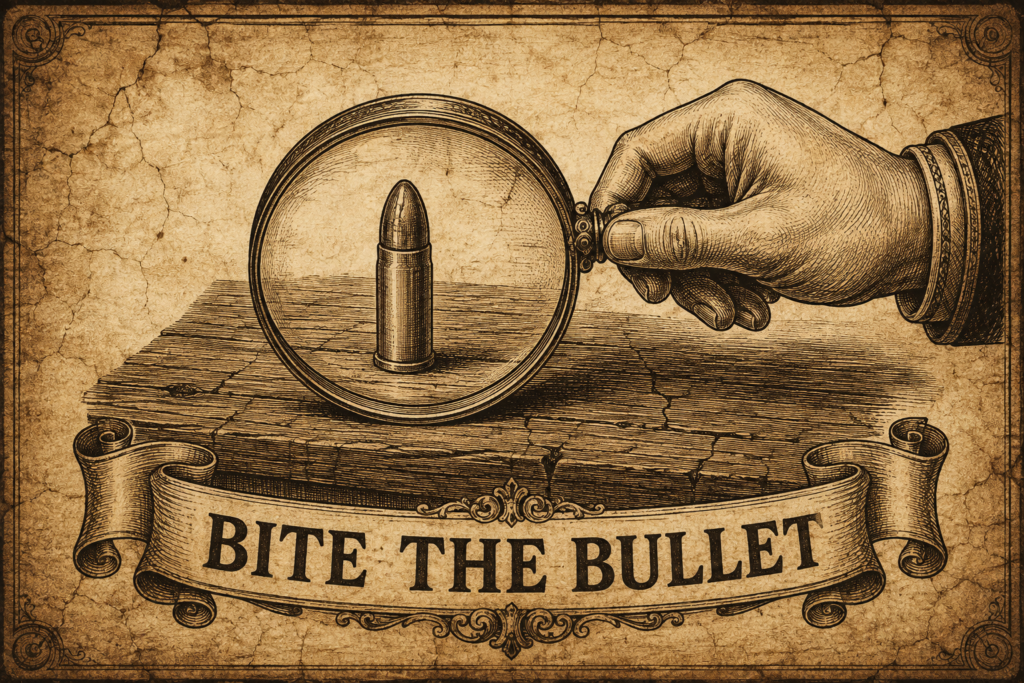
For more than a century, people have told each other to “bite the bullet” whenever something difficult finally has to be done. Most people believe the phrase comes from wounded soldiers literally biting down on a real bullet during battlefield surgery, long before doctors had anesthesia. It is a dramatic image, and it fits the meaning of the phrase perfectly. But when historians actually went looking for solid proof of this practice, they found something surprising. The evidence is much thinner than almost everyone assumes.
What You’ll Learn
- What “bite the bullet” really means, and how to use it naturally
- The popular battlefield story almost everyone repeats, and why it fits the phrase so well
- Why historians who study old documents are not fully convinced by that story
- A separate, well-documented piece of history that some experts connect to the phrase instead
- The one fact about this idiom that is genuinely proven, not just repeated
Table of Contents
- What Does “Bite the Bullet” Mean?
- The Popular Story: Biting Down During Surgery
- Why Historians Are Not Convinced
- A Different, Documented Piece of History
- What We Actually Know for Certain
- How to Use This Idiom Today
- The Bigger Lesson About Old Sayings
- Sources
What Does “Bite the Bullet” Mean?
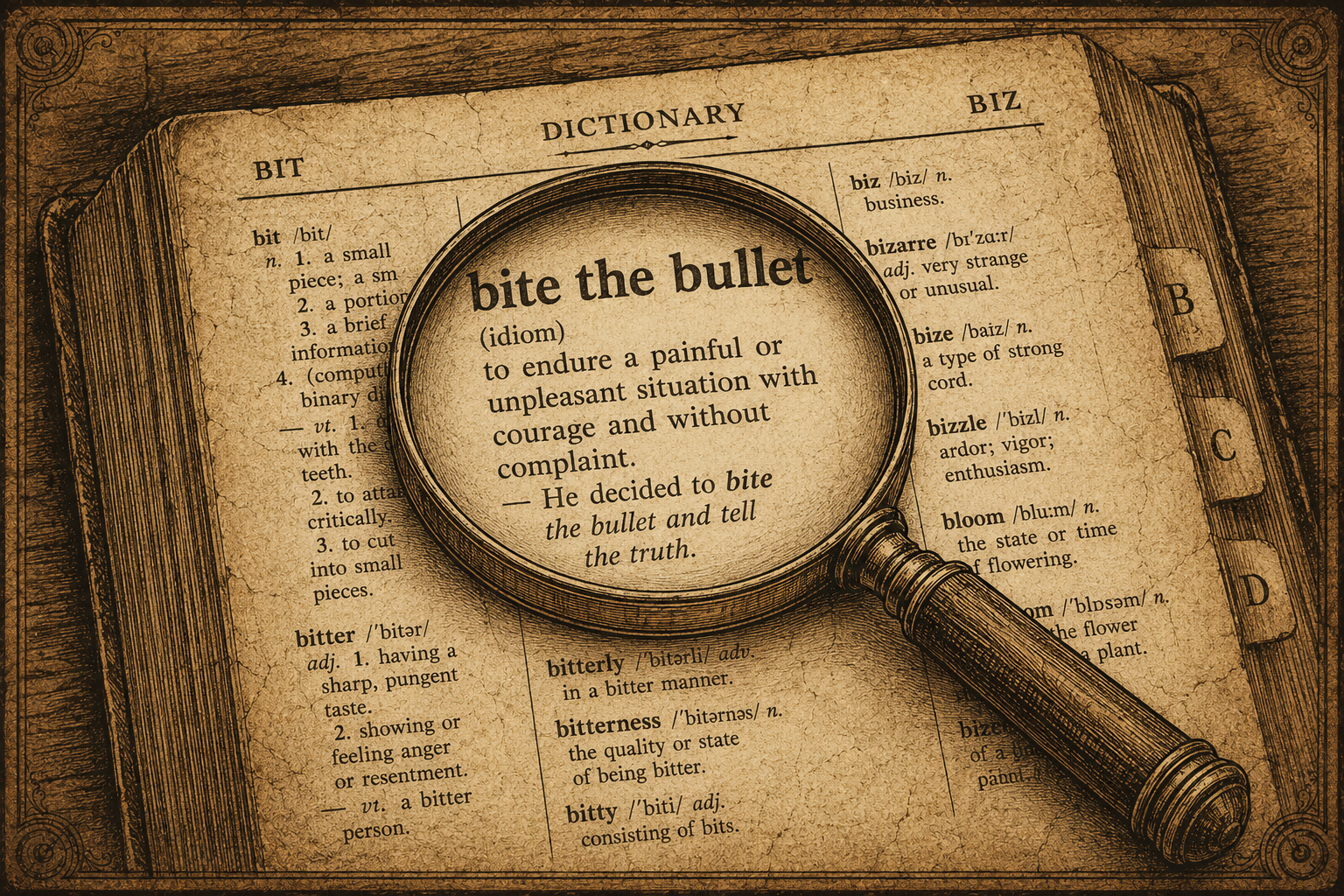
When someone says they are going to “bite the bullet,” they mean they are finally going to force themselves to do something hard, painful, or unpleasant, simply because it needs to be done. It is not about physical pain anymore. It is about mental courage.
For example, imagine you have been avoiding a difficult conversation with your boss for weeks. One morning, you finally walk into her office and have it anyway. Your friend might say, “Wow, you finally bit the bullet.” The phrase always carries that same feeling, quiet courage after a long delay, not excitement, just the decision to stop avoiding something.
The Popular Story: Biting Down During Surgery
Here is the story almost everyone repeats when they explain where this idiom comes from.
Before modern anesthesia existed, doctors on the battlefield sometimes had to perform emergency surgery, including amputations, on soldiers who were fully awake and in serious pain. According to the popular story, these soldiers were given an actual bullet to bite down on. The idea was that clenching something hard between their teeth would help them stay still, stay quiet, and endure the procedure without moving.
It is easy to see why this story spread so widely. It is vivid, it is dramatic, and it matches the modern meaning of the idiom almost perfectly, enduring something painful because you have no other choice. The image of a soldier literally biting a bullet feels like the perfect explanation for a phrase about gritting your teeth through hardship.
Why Historians Are Not Convinced
Here is where the story runs into a problem. When historians who study old military and medical records went looking for actual proof of this specific practice, they did not find much support for it.
What they found instead is that leather straps and wooden sticks show up far more often in historical accounts of field treatment than bullets do. A leather strap makes practical sense. It is soft enough not to damage teeth badly, and it was already a common item soldiers carried. A metal bullet, by comparison, is an odd and slightly impractical choice for something meant to be bitten under pressure.
None of this proves that no soldier, anywhere, ever bit down on a bullet during a desperate moment. It simply means there is no solid documentary evidence connecting that specific act to the origin of this specific idiom. The story may be partly true in isolated cases, but as a proven origin for a phrase used by millions of English speakers, it does not hold up the way most people assume.
A Different, Documented Piece of History
There is another theory, and unlike the surgery story, this one is backed by real, extensively documented history.
During the Indian Rebellion of 1857, British soldiers used rifle ammunition that came wrapped in paper cartridges. To load their weapons, soldiers had to bite the end off each cartridge first. When word spread that the cartridge grease was made from animal fat, many Indian soldiers serving under British command refused the order, because using it directly violated their religious beliefs.
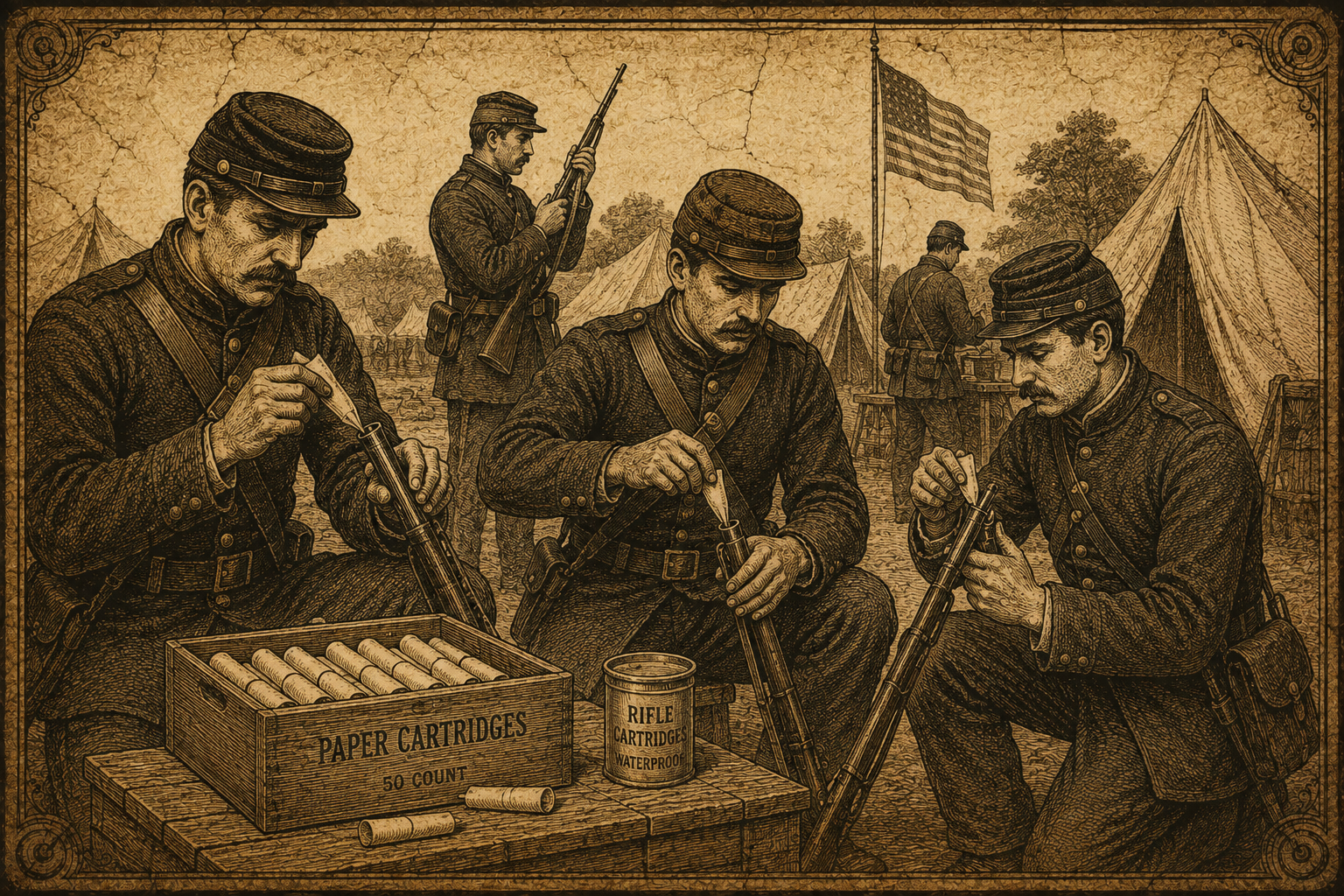
This event is completely real, and it is one of the most well documented moments in that period of history. What is far less certain is whether this specific incident is actually where the English idiom comes from, or whether it is simply a powerful historical story that got linked to an already existing phrase sometime later. Language historians treat this as a strong, interesting possibility, not as a confirmed answer.
What We Actually Know for Certain
After all the theories, here is the one part of this story that is not up for debate.
The first known written use of “bite the bullet” as an idiom appears in 1891, in Rudyard Kipling’s novel The Light That Failed. In that scene, one character urges another to stay brave and push through fear, telling him to “bite on the bullet.” This is a real, dated, printed text that anyone can check for themselves today.
That single fact is genuinely proven. Everything that supposedly happened before 1891, the surgeries, the battlefield legends, the theatrical tricks some people mention, remains theory rather than documented fact. Sometimes the most honest answer a word detective can give is simply, “this is where the trail goes cold, and this is where the paper evidence actually begins.”

How to Use This Idiom Today
You do not need to know any of this history to use the phrase correctly in everyday English. It fits almost any situation where someone finally accepts a difficult task they have been avoiding.
Here are some natural examples:
“I have been putting off calling the dentist for weeks. I guess it’s time to bite the bullet.”
“The company knew prices had to go up eventually. They finally bit the bullet last month.”
“If you want to improve your English, at some point you just have to bite the bullet and start speaking, even if you make mistakes.”
Notice that the idiom usually follows a verb like “have to” or “finally,” and it almost always points toward something the person has been avoiding for a while. It works well in everyday conversation, casual writing, and relaxed workplace settings, though it would feel a little too informal for a very formal report or academic paper.
The Bigger Lesson About Old Sayings
There is something almost comforting about how uncertain this particular history turns out to be.
We like tidy stories. A single soldier, a single bullet, a single dramatic moment that explains everything. The truth, as usual, is messier than that. Several different explanations, some vivid, some historically real, all circling the same three words, with nobody able to prove exactly which one is right. That is not a failure of research. It is simply what happens to language that gets passed from mouth to mouth for over a hundred years, long before anyone thought to write down exactly where it started.
So the next time you tell a friend it is time to bite the bullet, you can also tell them the truth behind the phrase, that its real origin is still an open case, and that the one thing we know for certain is a British author writing it down in 1891, long after ordinary people were probably already saying it themselves.
Sources
- Bite the Bullet: Meaning, Origin, Example, Sentence, Etymology, TheIdioms.com
- “Bite the Bullet”: Meaning, Origin and How to Use It Correctly, Reader’s Digest
- Bite the Bullet, Meaning, Origin & Usage, History of English
- Where Does the Saying “Bite the Bullet” Come From?, Mental Floss
- ‘Bite The Bullet’: Phrase Meaning & History, No Sweat Shakespeare