Mara has not spoken to her brother in three years. Now they are hiking the one trail their father never finished, carrying his ashes and everything they never said to each other. Somewhere above the tree line, a storm is already forming. And some things buried for years do not stay buried forever.
Table of Contents
- Part 1: The Trailhead
- Part 2: What the Mountain Remembers
- Part 3: The Storm
- Part 4: The Shelter
- Part 5: The Summit
Part 1: The Trailhead
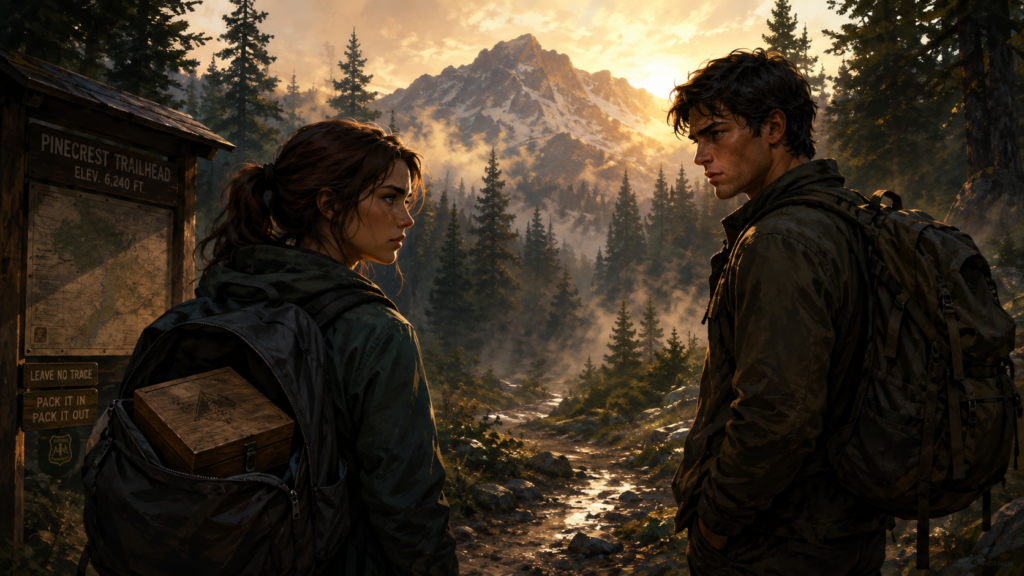
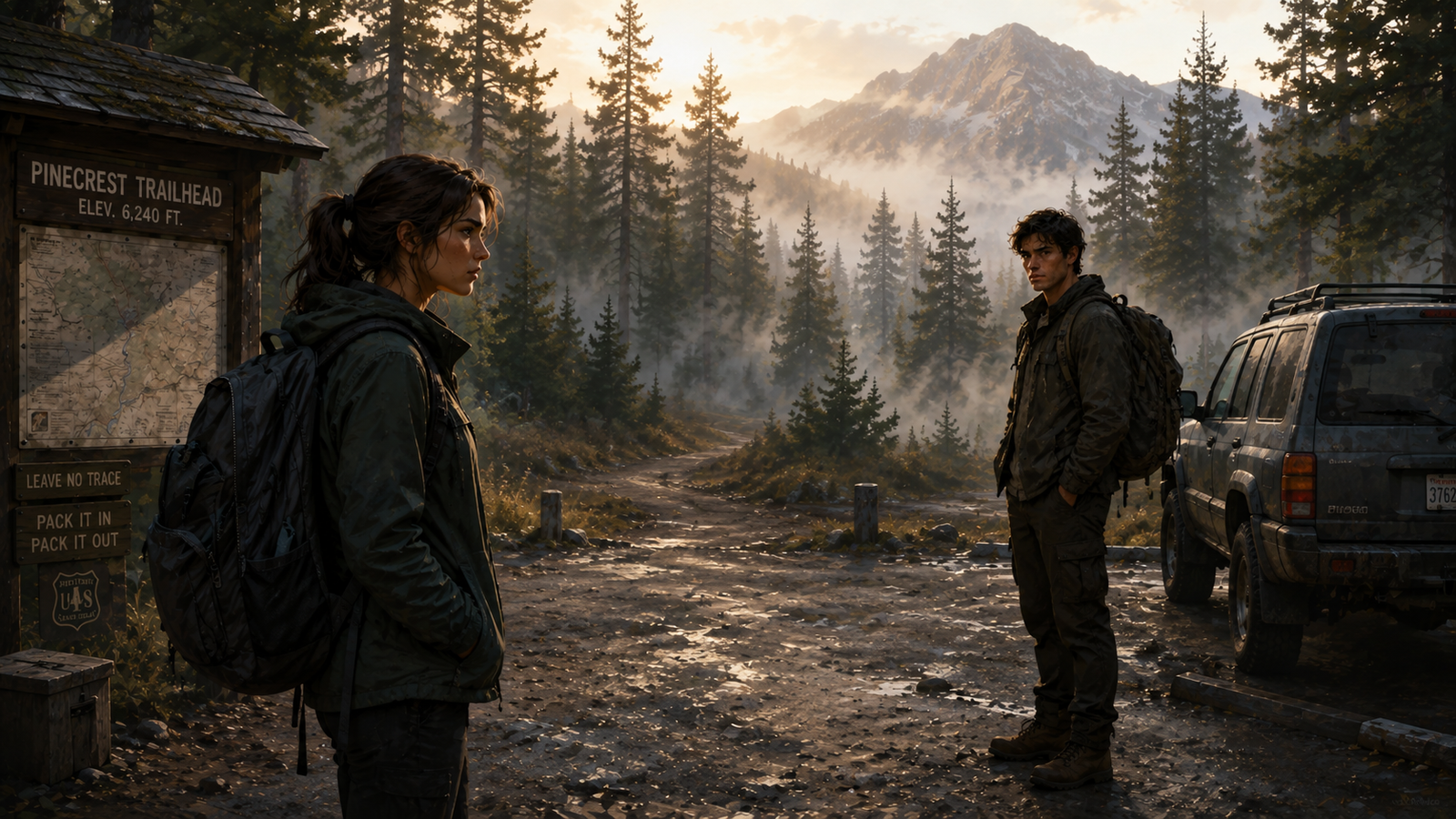
Mara stood at the trailhead with her father’s ashes in a plain wooden box, wondering, not for the first time, whether this entire trip had been a mistake. The parking lot was nearly empty at dawn, the air still cold enough to fog with every breath, and the mountain ahead of her looked far larger than it had in any of the photographs their father used to keep on his desk.
Jonah arrived twenty minutes late, exactly as she had expected. He climbed out of his rental car in expensive hiking gear that still had the tags half torn off, and for a moment neither of them said anything at all, the silence between them stretching out longer than it probably should have.
“You look tired,” he said finally.
“I’ve been managing Dad’s estate alone for six months,” Mara said, keeping her voice flat. “Tired doesn’t really cover it.”
Jonah’s jaw tightened, but he didn’t answer. They had agreed, mostly through silence rather than actual words, that today was not the day to relitigate the last three years, even though Mara suspected that promise would not survive the entire hike.
Their father, David, had wanted to summit Raven’s Ridge for as long as Mara could remember. He had planned the trip twice and canceled it twice, once for Mara’s wedding, once for his diagnosis. He never got a third chance, and it had fallen to Mara, in the quiet weeks after the funeral, to decide what should be done with the ashes still sitting in an urn on her kitchen counter.
She had not exactly invited Jonah so much as informed him, half expecting him to decline the way he had declined so much else over the last few years. To her surprise, he had simply said yes, and offered no explanation for why.
“The trail’s supposed to take two days,” Mara said, checking her pack one last time. “There’s an emergency shelter about halfway, if the weather turns.”
“It won’t,” Jonah said. “I checked the forecast this morning.”
Mara said nothing. She had learned, over the years, not to argue with her brother’s confidence, mostly because arguing with it had never once made it more accurate.
They started walking as the sun rose properly over the ridge line, the wooden box wrapped carefully inside Mara’s pack. Neither of them mentioned it directly. It felt safer that way, as if naming it too soon would make the whole trip unbearable before it had even properly begun.
For the first hour, they walked mostly in silence, broken only by the crunch of gravel and the occasional, careful comment about the scenery. It was Jonah who finally asked the question Mara had been dreading since she agreed to this trip.
“Do you actually forgive me?” he asked, not looking at her. “For leaving. For not being there when he got sick.”
Mara took a long breath before answering. “I don’t know yet,” she said honestly. “Ask me again at the top.”
Jonah nodded slowly, as if that answer, uncomfortable as it was, might actually be fair.
Part 2: What the Mountain Remembers
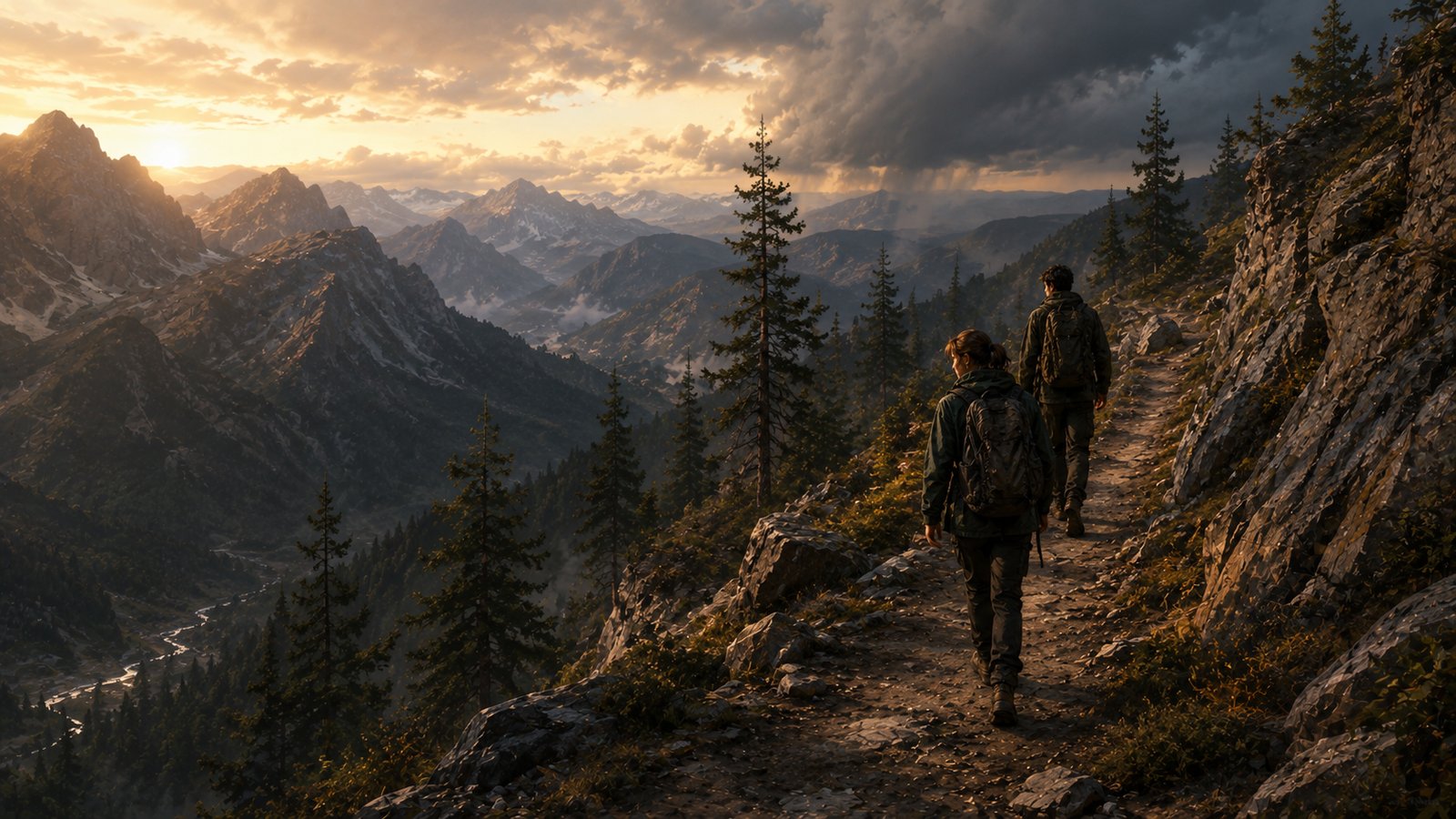
By midmorning, the trail had narrowed into a steep switchback path cut into the side of the mountain, thick pine forest giving way slowly to exposed rock and thinner, sharper air.
Mara found herself falling into an old rhythm she hadn’t used in years, matching her breath to her steps the way their father had taught them both as children, back when family hikes were still something they did together, before everything had quietly fallen apart around them.
She remembered one trip in particular, when she was maybe nine years old and Jonah was twelve. David had let them race ahead on a flat stretch of trail, calling out after them with mock seriousness that whoever reached the big oak tree first would get the last piece of chocolate he had smuggled into his pack against their mother’s wishes.
Jonah, of course, had let her win. She only understood that years later, once she was old enough to notice that a twelve-year-old could easily have outrun a nine-year-old if he had actually tried.
“Do you remember the chocolate tree?” she asked suddenly, surprising herself.
Jonah actually laughed, a real laugh, the first one she had heard from him in longer than she wanted to admit. “I let you win that race,” he said. “I hope you know that.”
“I figured it out eventually,” Mara said, smiling despite herself.
For a moment, the silence between them felt less like distance and more like two people simply walking, the way they used to. It didn’t last.
“Why did you really leave, Jonah?” Mara asked, more carefully this time. “It wasn’t just the job in Chicago. You could have come back, at least on weekends.”
Jonah was quiet for a long moment, staring out at the valley below them. “Because I couldn’t watch him get smaller every week,” he said finally. “I know that’s not a good reason. I know you had to watch it, every single day, while I ran. But I genuinely don’t think I could have survived staying, and I’ve spent three years being ashamed of that.”
Mara wanted to be angry. Some old, familiar part of her reached for the anger automatically, the way she always had whenever his name came up. But something about the honesty in his voice made it harder to hold onto this time than it usually was.
“I wish you had told me that back then,” she said quietly. “Instead of just disappearing without a real explanation.”
“I wish I had too,” Jonah admitted. “I didn’t have the words for it yet. I’m not sure I fully do now, if I’m honest.”
Above them, the sky had begun to shift, grey clouds gathering faster than either of them had noticed while they talked.
Part 3: The Storm
The wind picked up first, sudden and sharp, pulling at their jackets as the temperature dropped several degrees within what felt like only minutes.
“I thought you checked the forecast,” Mara said, unable to keep the edge out of her voice.
“I did,” Jonah said, frustration creeping into his own tone. “This wasn’t supposed to happen until tomorrow afternoon, according to everything I read.”
By the time the first heavy raindrops hit, they both understood they had badly misjudged how much time they had left before the storm actually arrived, and how exposed the ridge trail really was.
“We need to get off the ridge,” Mara said, raising her voice over the wind. “There’s supposed to be an emergency shelter marked on the map, somewhere past this next bend, if I remember the trail guide correctly.”
They moved as quickly as the terrain allowed, rain turning the narrow trail slick and unstable beneath their boots almost immediately. Visibility dropped fast, the mountain around them disappearing into grey mist and heavier rain with every passing minute.
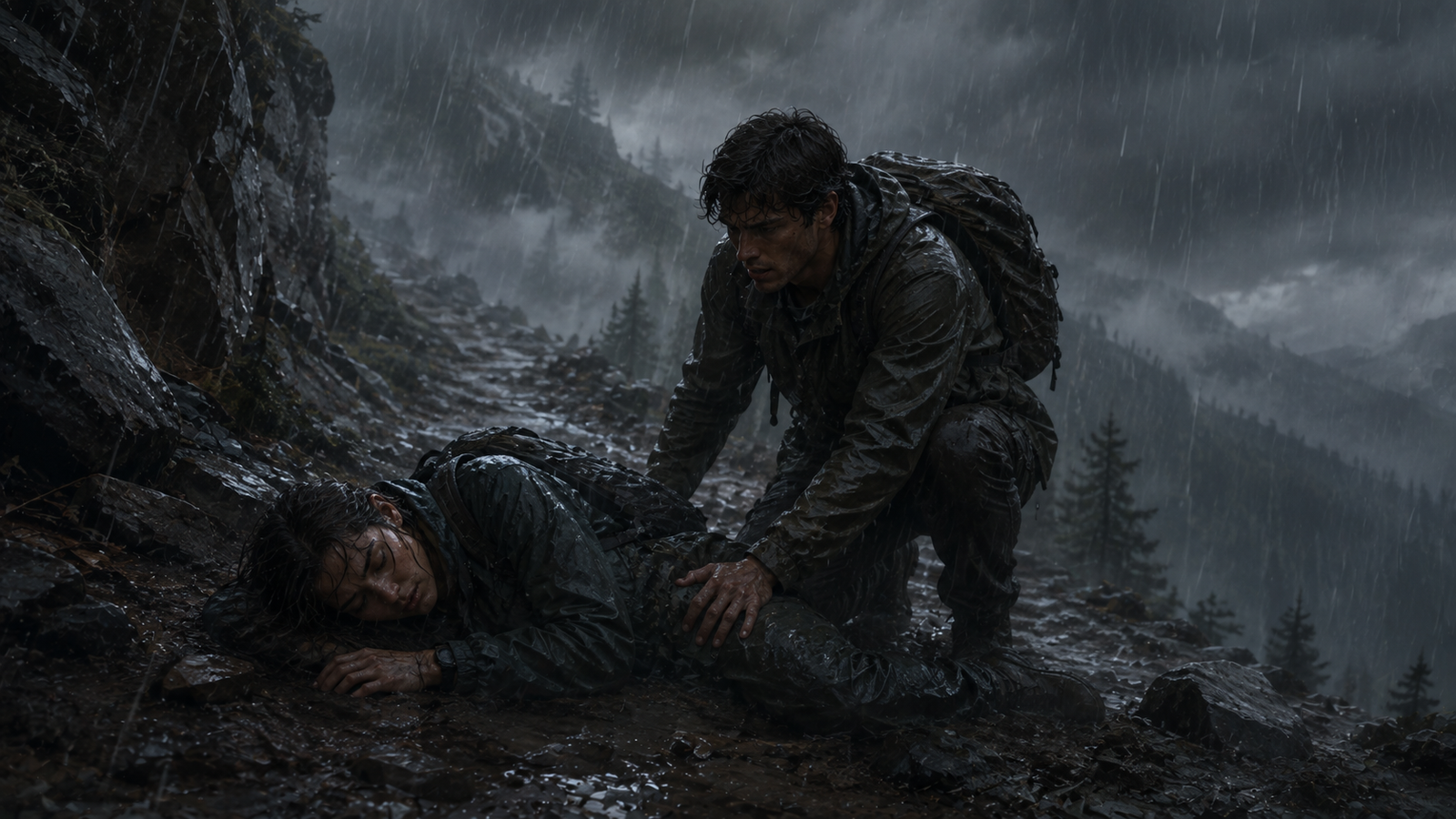
“Mara, wait!” Jonah shouted, but it was too late. Her foot slid across a wet rock, and she went down hard, her ankle twisting painfully beneath her as she landed.
Pain shot up her leg immediately, sharp enough that for a moment she genuinely could not tell how badly she was hurt, or whether she would even be able to stand again.
“Don’t move,” Jonah said, crouching beside her instantly, his earlier frustration gone entirely, replaced by something closer to real fear. “Let me look at it first.”
“It’s not broken,” Mara said through gritted teeth, though she honestly wasn’t certain of that at all. “I think. Probably just twisted badly.”
“We’re not that far from the shelter,” Jonah said, glancing at the map on his phone before the screen went dark completely, the battery apparently defeated by the cold and the rain together. “I think it’s just ahead, past those rocks.”
“You think?” Mara asked, unable to keep the fear out of her own voice now.
Jonah looked at her directly, and for the first time in years, Mara saw something in his expression that looked almost like the brother she remembered from before, before everything, before the long distance between them.
“I’m not leaving you here,” he said simply. “Lean on me. We’ll go slowly, together.”
Part 4: The Shelter
They found the shelter almost by accident, a low stone structure built into the hillside, easy to miss if the rain hadn’t practically pushed them directly toward its narrow doorway.
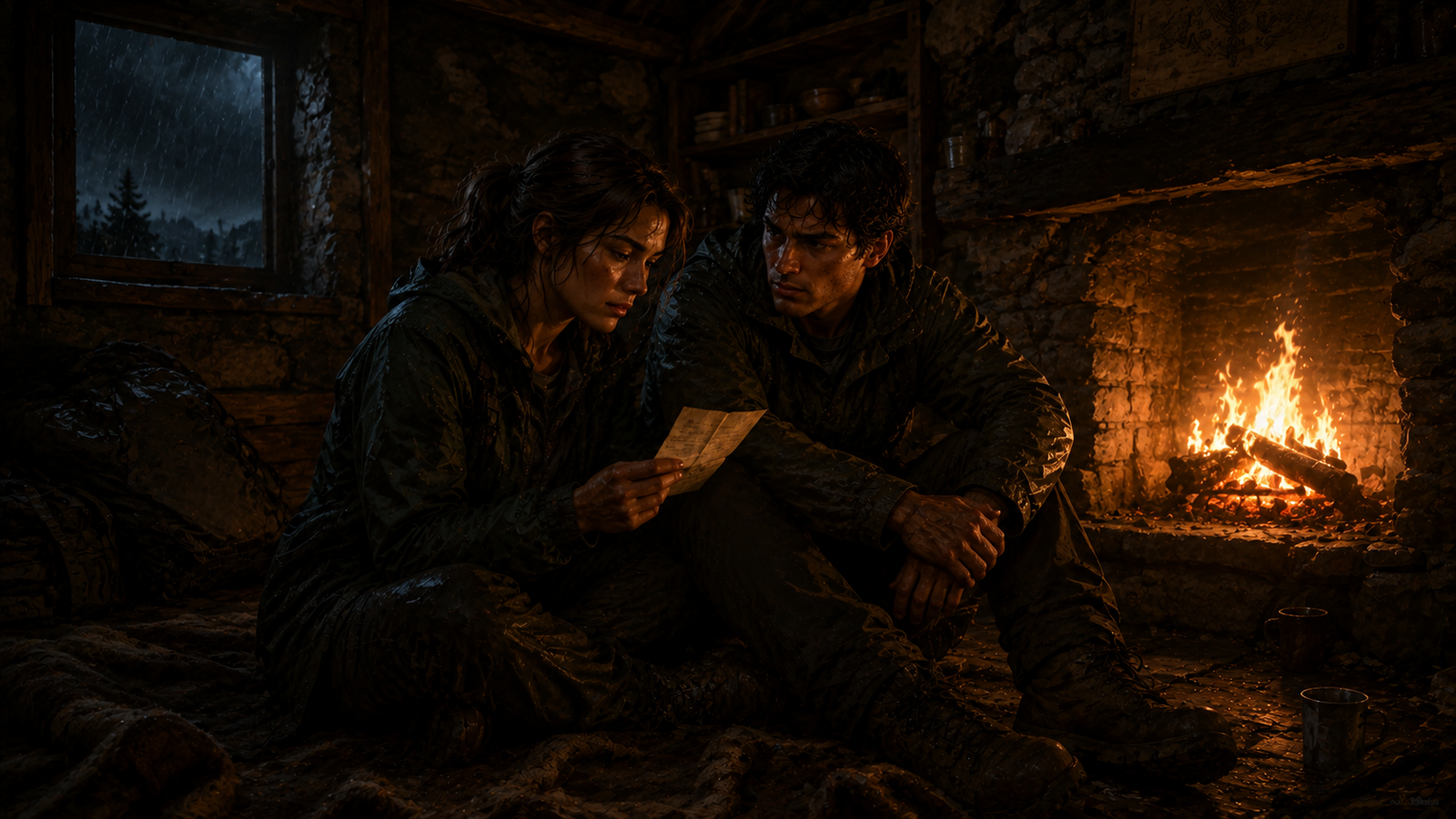
Inside, it was dry, if not exactly warm, with a small stone fireplace and a stack of firewood that had clearly been left behind by earlier hikers passing through.
“There’s someone else’s gear here,” Mara said, noticing a worn backpack in the corner, along with a battered lantern resting on a wooden shelf.
A moment later, the shelter’s actual occupant appeared in the doorway, shaking rain from a weathered jacket. He introduced himself as Sam, a park ranger who had been checking trail conditions when the storm caught him just as badly as it had caught them.
“You two picked a rough week for this,” Sam said, kneeling to examine Mara’s ankle with practiced, careful hands. “It’s swollen, but I don’t think anything’s broken. You’ll want to keep weight off it tonight, though, just to be safe.”
As Sam built a small fire, the shelter slowly filled with warmth, and something in the enforced stillness seemed to loosen whatever had still been holding Jonah and Mara apart, even after everything they had already said on the trail.
Once Sam stepped outside to check the weather, Jonah reached into his own pack and pulled out a worn, folded piece of paper, holding it for a long moment before handing it to Mara.
“I wrote this two years ago,” he said quietly. “A letter to Dad. I never sent it. I didn’t know how, honestly, and then I kept telling myself there would be more time.”
Mara unfolded it carefully. The handwriting was uneven, clearly written and rewritten more than once. It was an apology, longer and more honest than anything Jonah had managed to say out loud in years, admitting that he had left not because he stopped caring, but because he was terrified of who he would become if he stayed and watched their father disappear piece by piece.
“I should have shown you this a long time ago,” Jonah said. “Instead of just letting you believe I didn’t care.”
Mara stared into the small fire for a long moment before answering. “I was angry at you for so long,” she said. “I think some part of me still is. But I think I understand it now, in a way I genuinely couldn’t back then.”
“Do you think he forgave me?” Jonah asked. “Dad, I mean. Before he died.”
“He never once said a bad word about you,” Mara said honestly. “Not once, in six months. I used to think that meant he didn’t understand what leaving cost me. Now I think maybe he understood exactly what it cost both of us, and he decided it wasn’t his place to hold onto it.”
Jonah’s eyes were wet in the firelight, though neither of them mentioned it directly. “If I had known how sick he really was that final year,” he said, “I would have come back sooner. I promise you that, whatever it’s worth now.”
“I believe you,” Mara said, and found, somewhat to her own surprise, that she genuinely meant it.
Part 5: The Summit
By morning, the storm had passed completely, leaving the mountain washed clean under a pale, fragile sunrise that neither of them had expected to see so soon.
Mara’s ankle was still tender, but with Sam’s spare hiking pole and Jonah’s steady arm to lean on, she found she could manage the final stretch of trail well enough, even if slower than they had originally planned.
“You don’t have to push through this,” Jonah said, watching her carefully as they approached the last steep section before the summit. “We can turn back. Dad would understand, more than anyone.”
“No,” Mara said firmly. “We came this far. I want to finish it. With you, not without you.”
The final climb was slow and quiet, both of them saving their breath for the effort rather than conversation, until finally the trail opened onto a wide, rocky summit overlooking the entire valley below, exactly the way their father had always described it.
Mara opened her pack carefully and took out the wooden box, holding it for a long moment before she could bring herself to open it.
“He used to say this view would be worth every complaint we made on the way up,” Jonah said softly, looking out over the valley stretched below them.
“He wasn’t wrong,” Mara said, her voice unsteady.
Together, without needing to discuss it, they opened the box and let their father’s ashes scatter into the wind, watching them disappear slowly over the ridge and down into the valley he had spent so many years trying, and failing, to reach on his own.
“Do you forgive me now?” Jonah asked quietly, echoing his question from the trailhead the day before.
Mara considered the question honestly this time, thinking of the years of silence, the anger she had carried for so long, and the version of her brother she had gotten to know again over the last difficult day, letter and all.
“I think I’m getting there,” she said finally. “I think we both are, actually.”
Jonah nodded, and for the first time in three years, he reached out and pulled his sister into a real embrace, both of them standing quietly at the summit their father never got to see, finally arriving together, exactly as he had always hoped they would.
The End
Key Vocabulary
| Word | Meaning | Example |
|---|---|---|
| Estranged | no longer close or in contact with someone, often after a disagreement. | He was estranged from his father for almost a decade. |
| Switchback | a path or road that turns sharply back and forth up a steep hill. | The trail was a series of switchbacks climbing the mountainside. |
| Relitigate | to argue about or reconsider something that was already decided or discussed. | They agreed not to relitigate the old argument at dinner. |
| Ridge | the long, narrow, raised top part of a mountain or hill. | We watched the sunset from the ridge above the valley. |
| Twisted | injured by turning suddenly in an unnatural way. | She twisted her wrist when she fell off her bike. |
| Occupant | a person who is living in or using a particular place. | The apartment’s previous occupant left some furniture behind. |
| Estate | all the money, property, and belongings that a person leaves behind after they die. | It took months to settle her grandmother’s estate. |
| Summit | the highest point of a mountain. | They finally reached the summit just before sunset. |
Quick Check
- Why haven’t Mara and Jonah spoken in three years, according to the story?
- What happens to Mara on the trail during the storm?
- Who is Sam, and how does he help Mara and Jonah?
- What does Jonah give Mara inside the shelter, and why is it important?
- By the end of the story, do you think Mara has truly forgiven her brother, or is forgiveness more complicated than that? Explain your answer.
Ready for another journey? Continue with The River That Doesn’t Wait | B2 Adventure Story.