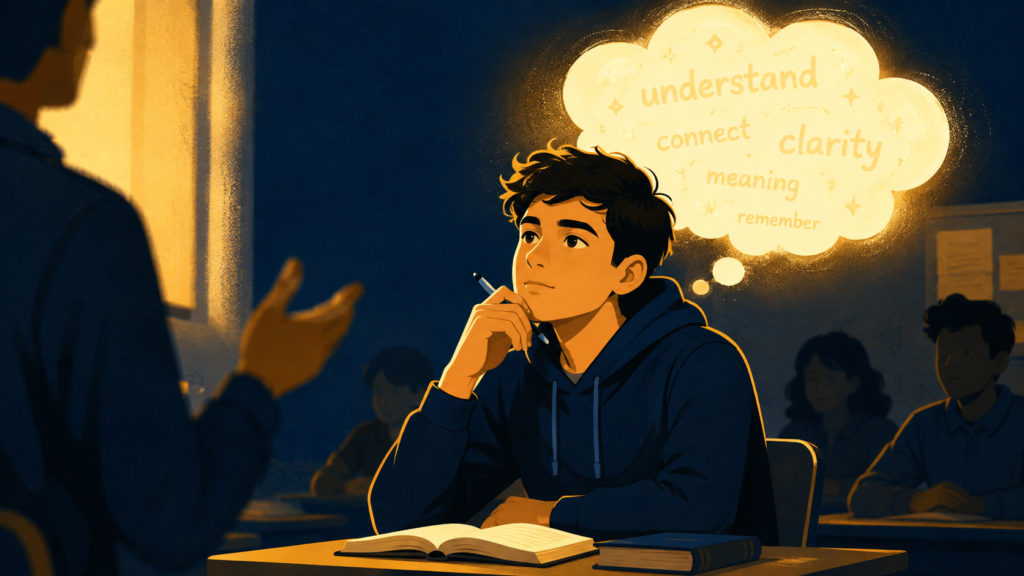
Farid sat in the back row of his English conversation class, heart pounding, praying the teacher wouldn’t call on him. He understood almost everything being said. He just couldn’t make himself speak. For months, he assumed something was wrong with him. It turns out there’s a name for exactly what he was going through, and a surprising number of researchers think it might actually be a good sign.
What You’ll Learn
- What the “Silent Period” is, and why some learners go through it
- The linguistic theory behind it, and where the idea originally came from
- What’s actually happening inside a learner’s brain during this quiet stage
- The honest scientific debate over whether this stage is universal
- What to actually do if you think you’re in your own silent period right now
Table of Contents
- What Is the Silent Period?
- The Theory Behind It
- What Silence Actually Looks Like on the Inside
- The Honest Debate: Does Everyone Go Through This?
- Why Forcing Speech Too Early Can Backfire
- How to Use This If You’re in Your Own Silent Period
- Sources
What Is the Silent Period?
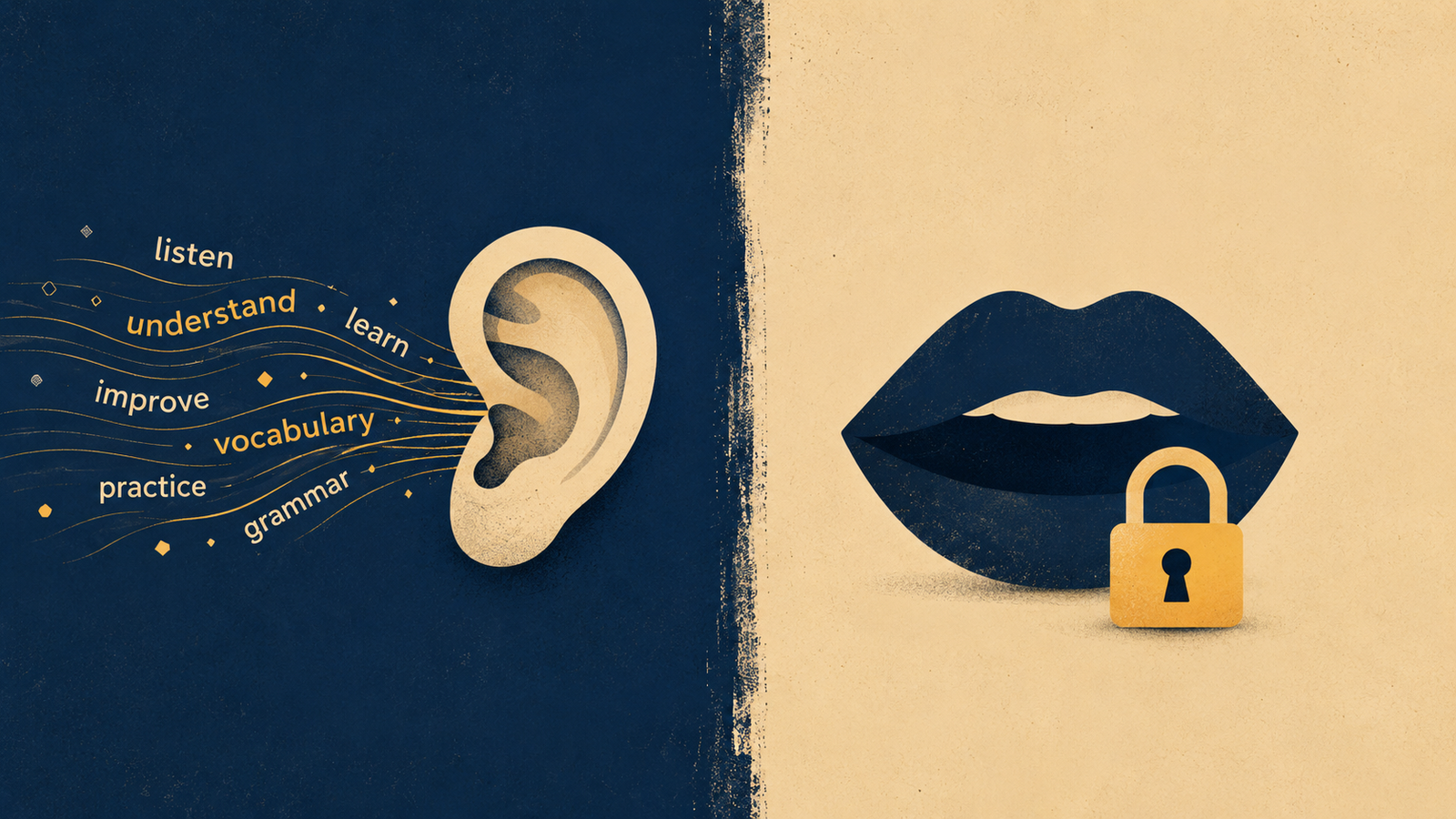
The Silent Period describes a stage, usually early in the language learning journey, when a learner understands a real amount of the new language but doesn’t yet produce much of it out loud. Not shyness exactly. Not laziness. Just a genuine gap between what the brain can receive and what it feels ready to send back out.
Farid didn’t know this had a name. He just knew that every time his teacher looked his way, his mind would go completely blank, even though, later that same evening, he could understand an entire English podcast episode without much effort at all. Understanding clearly wasn’t the problem. Speaking on command was.
The Theory Behind It
The term itself comes from linguist Stephen Krashen, one of the most influential researchers in second language acquisition. Krashen’s broader Input Hypothesis argues that real language ability comes primarily from understandable input, listening and reading you can actually follow, not from grammar drills or forced practice. The Silent Period is essentially a natural extension of that idea: before a learner has absorbed enough of the language through input, Krashen argues, they simply don’t have the internal material yet to produce accurate, natural output.
Krashen paired this with something he called the Affective Filter Hypothesis. In plain terms, it says that stress, embarrassment, and pressure act like a mental wall, blocking new language from sinking in, even when a learner is technically exposed to plenty of it. Push a nervous learner to speak before they’re ready, in other words, and you may not just fail to help them speak sooner. You might actually slow down everything else they’re absorbing at the same time.
What Silence Actually Looks Like on the Inside
Here’s the part that surprised Farid most once he actually researched it: silence, in this context, doesn’t mean nothing is happening.
Researchers who have closely studied children going through a silent period in a new language have found that many of them are quietly active the entire time, using what’s called private speech: repeating words to themselves under their breath, rehearsing phrases silently, mentally trying out sentence patterns before ever saying them to another person. One well known study used hidden microphones to capture this private rehearsal happening constantly, even while the children appeared, from the outside, to be simply not talking.
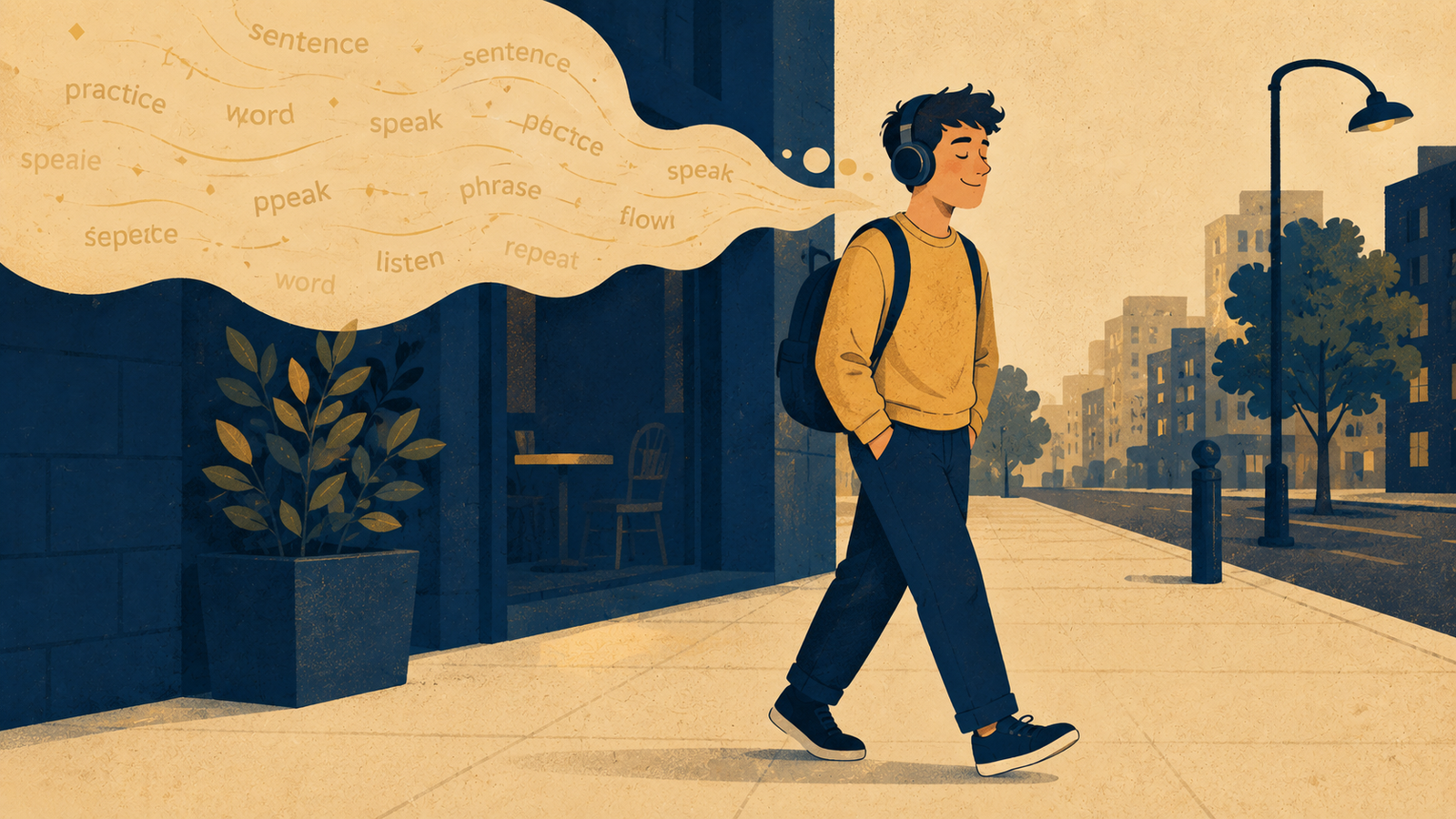
Farid recognized this immediately once he read about it. He’d been doing something similar without realizing it mattered: silently repeating phrases from his podcasts while walking to work, testing out sentences in his head before conversation class even started. He’d assumed this was just nervous habit. It turns out it may have been exactly the kind of internal practice this stage is built around.
The Honest Debate: Does Everyone Go Through This?
It would be dishonest to present the Silent Period as a settled, universally agreed-upon fact, so let’s not do that.
Not every researcher accepts Krashen’s original framing. A formal review of twelve separate studies on the silent stage in children found the supporting evidence genuinely limited, with real methodological weaknesses in several of the underlying studies. Other researchers have questioned whether a distinct “silent period” truly exists as a required stage, or whether it simply describes ordinary individual variation, some learners are naturally quieter or more cautious than others, dressed up as a formal linguistic concept.
What most researchers on both sides do seem to agree on is something less flashy but still genuinely useful: forcing a nervous, underprepared learner to produce speech before they’re ready tends to raise anxiety without necessarily speeding up real progress, and different learners clearly need very different amounts of listening time before speaking feels natural. Whether or not it deserves the specific name “Silent Period,” that basic pattern shows up again and again.
Why Forcing Speech Too Early Can Backfire
This is where Krashen’s Affective Filter idea becomes genuinely practical rather than just theoretical. A learner who is anxious, embarrassed, or constantly put on the spot tends to tense up around the entire language, not just the specific sentence they’re struggling to produce in that moment.
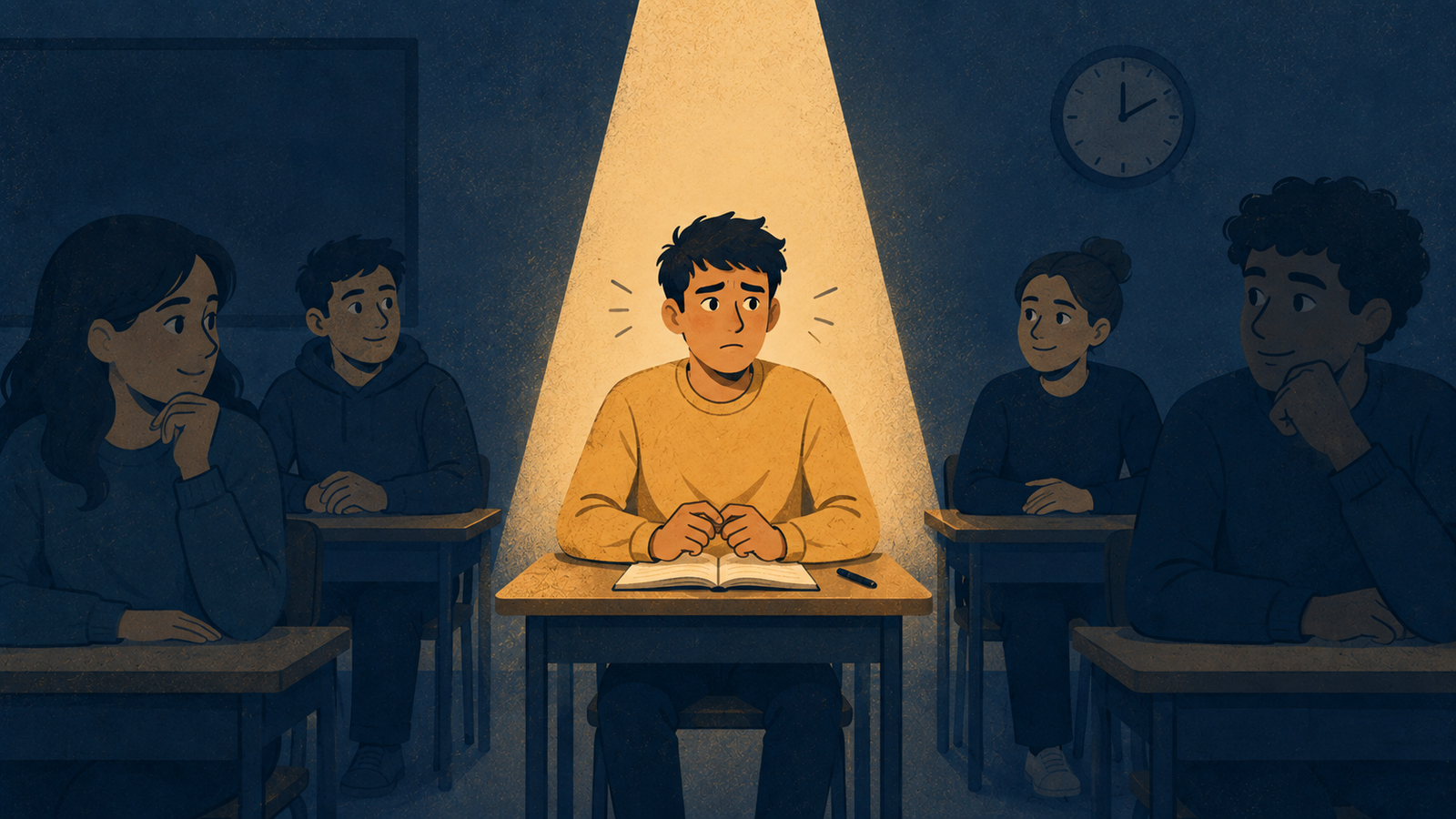
Farid’s breaking point came the day his teacher gently but publicly corrected him mid-sentence in front of the whole class. He stopped volunteering answers entirely after that, and for a while, he even stopped watching his usual English shows at home, the exact input that had been quietly helping him the most. The pressure to perform hadn’t just affected his speaking. It had started affecting his motivation to engage with English at all.
How to Use This If You’re in Your Own Silent Period
None of this means you should avoid speaking English forever, waiting for some perfect, fully-ready moment that may never arrive on its own. But it does suggest a gentler, more realistic approach for learners who feel stuck the way Farid did.
- Give yourself real permission to prioritize listening and reading first, especially early on, without treating that as avoidance or laziness.
- Practice speaking in low-pressure settings before high-pressure ones: alone, out loud, or with a patient friend, before a formal classroom or a stranger.
- Pay attention to whether you’re already privately rehearsing phrases in your head. That’s not nothing. That’s active practice, even if no one else can hear it.
- When you do start speaking more, expect it to feel sudden rather than gradual. Many learners describe a real “unlocking” moment rather than a slow, steady climb.
Farid eventually did start speaking up in class again, just not because anyone pushed him to. It happened gradually, on a weekend trip, when a stranger asked him for directions and the English simply came out, already formed, like it had been quietly waiting for the right moment all along.
Sources
Quick Check
- What is the Silent Period, in simple terms?
- According to Krashen’s Affective Filter Hypothesis, what can stress and pressure do to a learner’s progress?
- What did researchers discover children were often doing internally during a silent period, even though they weren’t speaking out loud?
- Why does the article say it would be dishonest to present the Silent Period as a fully settled scientific fact?
- Have you ever felt like Farid, understanding more than you could say out loud? What helped you move past that feeling, or what do you think might help?