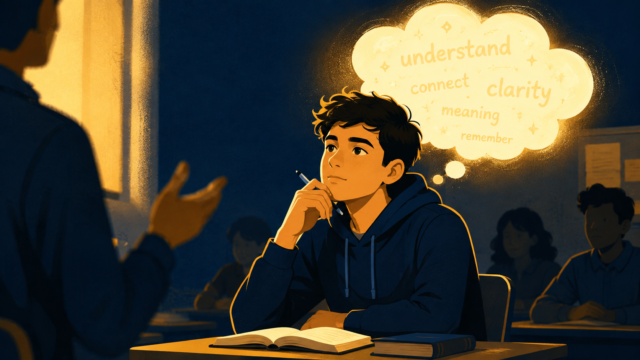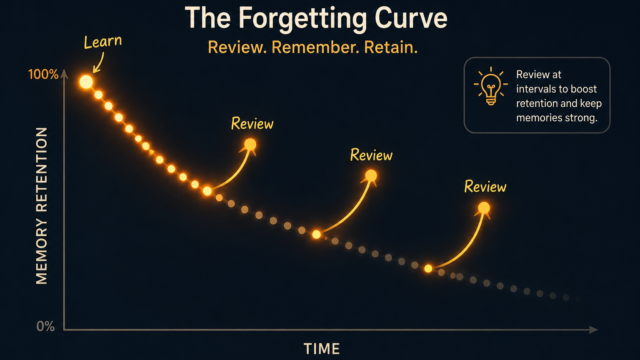

You studied grammar for years. You saved thousands of flashcards. You can even explain the third conditional. But when someone speaks to you in real English, your mind goes blank.
If this sounds like you, you are not bad at English. You are using the wrong method. There is one simple habit that fixes this problem for thousands of learners every year, and it has nothing to do with more rules or more apps.
What you’ll learn in this article:
- Why studying grammar for years does not always lead to real fluency
- What a “graded reader” is, and why it is different from a normal book
- The real science behind why stories teach words better than flashcards
- How to choose the right reading level for your English
- A simple weekly plan you can start today, even with a busy life
In this article:
- Why Grammar Study Alone Does Not Create Fluency
- What Is a “Graded Reader”
- Why Stories Teach New Words Better Than Flashcards
- The Real Reason Most People Quit English
- How to Pick the Right Reading Level
- A Simple Weekly Reading Plan
- What the Research Actually Says

Why Grammar Study Alone Does Not Create Fluency
Here is something most English courses never explain. Knowing a grammar rule and using it naturally in a real conversation are two very different skills.
Think about your own first language. You did not learn to speak it from a grammar book. You learned it by hearing it again and again, in situations that made sense to you, long before anyone taught you a single rule. By the time you studied grammar at school, you already spoke your language well. The rules were just names for something your brain had already learned on its own.
Many adult English learners try to do this in the opposite order. They learn the rule first and hope speaking will follow. But a rule you memorize is not the same as a skill your brain can use instantly while you are speaking or reading.
This is why so many learners feel stuck in the same place. They can pass a grammar test, but they freeze in a real conversation. The knowledge is there. Fast, natural access to it is not. That fast access only comes from one thing: real exposure to English, again and again.
What Is a “Graded Reader”
A graded reader is a story written for one specific English level. The words, the sentence length, and the grammar are all controlled, so the story sits just a little above what you already know.
In language teaching, this is called comprehensible input. It simply means you understand almost everything you read, with just enough new words mixed in to slowly grow your English.
This is very different from picking up a novel written for native speakers, where you might stop at every second sentence to check a word in the dictionary. That kind of reading is tiring, and tiredness kills motivation fast. A good graded reader keeps you inside a story you can actually follow, while your brain quietly picks up new grammar and vocabulary in the background, the same natural way it learned your first language.
A well-designed graded reading system also raises the difficulty slowly, level by level. By the time you finish one level, you are already halfway ready for the next one, without feeling a sudden jump in difficulty.
Why Stories Teach New Words Better Than Flashcards
A flashcard teaches you a word alone, with no life around it. A story teaches you the same word inside a real moment: the sentence around it, the feeling attached to it, the situation where a real person would actually say it.
Imagine you learn the word “betray” from a flashcard. You remember the translation for a few days, then it slowly disappears from your memory.
Now imagine you meet that same word inside a story, at the exact moment a character finds out their best friend lied to them. Your brain does not just store a definition. It stores a scene, a feeling, and a result, all connected to that one word. This kind of emotional connection is exactly what makes a word stay in your memory for years, not days.
This idea is not new. It comes from decades of research in language learning. Linguist Stephen Krashen, one of the most well-known researchers in this field, has argued for years that we truly learn a language when we understand real, meaningful messages in it, not when we memorize isolated rules and word lists. Large reviews of many studies on extensive reading, meaning reading a large number of books at a comfortable level, keep finding the same pattern: learners who read a lot at the right level improve their vocabulary and grammar sense faster than learners who mainly study from textbooks. Like most theories in this field, Krashen’s ideas also have critics, who argue that reading alone is not always enough and that real speaking practice matters too. Still, almost every researcher agrees on one core point: reading real, understandable stories builds vocabulary far better than memorizing isolated word lists.
The Real Reason Most People Quit English
Most people do not quit English because it is too hard. They quit because it is boring.
A grammar workbook does not make you want to open it again tomorrow night. A good story does. When a book is genuinely interesting, something changes in your mind. You stop feeling like you are “studying.” You start feeling like you are simply reading, because you actually want to know what happens next.
This shift matters more than any study technique, because it solves the one problem that ends most people’s English journey: giving up too early. You cannot build a habit from a method you dread opening. You can build one from a method you actually look forward to.
This is also why graded readers work so well for adults who tried English before and gave up. The problem was probably never a lack of discipline. It was a method that gave them nothing enjoyable to hold on to.

How to Pick the Right Reading Level
Choosing the right level is the single biggest factor in whether this method works for you.
If you understand almost 100% of the page with zero effort, the book is too easy to really grow your English. You will finish it feeling good, but your skill will not stretch much.
If you need a dictionary for almost every sentence, the book is too hard. You will get tired fast, and that tiredness will make you connect reading with frustration instead of progress.
The right level feels like a light stretch. You understand almost all of the story. Every few sentences, you meet a new word or structure, but you can still guess its meaning from the story around it. That gentle, repeated stretch is exactly what builds real skill over time, without ever feeling like hard work.
If you are not sure where you stand, start one level lower than you think you need. A book that feels a little too easy for the first few pages is far better than one that makes you want to quit by page three.
A Simple Weekly Reading Plan
You do not need hours every day for this method to work. Showing up often matters far more than reading for a long time.
- Read for 15 to 20 minutes, most days of the week. This small amount of daily exposure is enough to build real progress over time.
- Read for the story, not for perfection. Do not stop at every unknown word. Let the sentence around it carry you forward. Guessing the meaning from context is not cheating. It is one of the most important skills in learning a language.
- Listen while you read, whenever you can. Hearing the story while you follow the words trains your ear to connect sounds with spelling. This is one of the biggest gaps for learners who studied mostly through apps or textbooks. This simple habit, often called reading while listening, builds both pronunciation and reading speed at the same time.
- Finish what you start, even if the ending feels a little too easy for you. Completing a full story gives your brain a real sense of progress, and that feeling keeps you coming back. That habit is worth more, long term, than jumping to a harder book and giving up halfway through it.
What the Research Actually Says
Graded reading is not a new trend or a marketing idea. Language researchers have studied this approach for decades, under the name comprehensible input, and the pattern in the research stays remarkably consistent. Learners who read a lot at the right level tend to improve faster in vocabulary, grammar sense, and reading speed than learners who depend mainly on textbook study alone.
The reason is simple once you see it clearly. A grammar book teaches you facts about a language. A story lets you live inside that language, the same way you once lived inside your first one, long before anyone taught you a single rule.
If you have studied English for years without feeling real progress, the problem was probably never your effort. It was the method. Choose a story a little above your current level, follow a character you genuinely care about, and let the language do what it does best: teach you quietly, again and again, without you having to force it.